
News about planet Earth.
Climate Science

A parasitic barnacle called Sacculina injects itself into a crab, grows a root system through its host's body, and chemically rewires the crab's brain to care for the parasite's eggs as if they were its own, even castrating male crabs so they behave like females tending a brood.

Sacculina carcini enters a shore crab as a droplet of cells, grows rootlets through the host's body, castrates and feminises males, and hijacks the crab into raising the parasite's eggs as if they were its own brood.

By Terra Daily Editorial Team · Aug 16, 2026

Latest

All articles →
Physics News

Marie Curie processed several tonnes of pitchblende by hand in a leaky Paris shed with no floorboards, boiling and filtering the ore for nearly four years to isolate about a tenth of a gram of radium chloride, whose samples glowed faintly in bottles across the shed and slowly damaged her fingertips

Between 1898 and 1902, Marie and Pierre Curie processed tonnes of pitchblende by hand in a leaky Paris shed to isolate roughly a tenth of a gram of radium chloride — a luminous pinch of salt that changed medicine and slowly destroyed her hands.

By Terra Daily Editorial Team · Aug 17, 2026

Space Travel

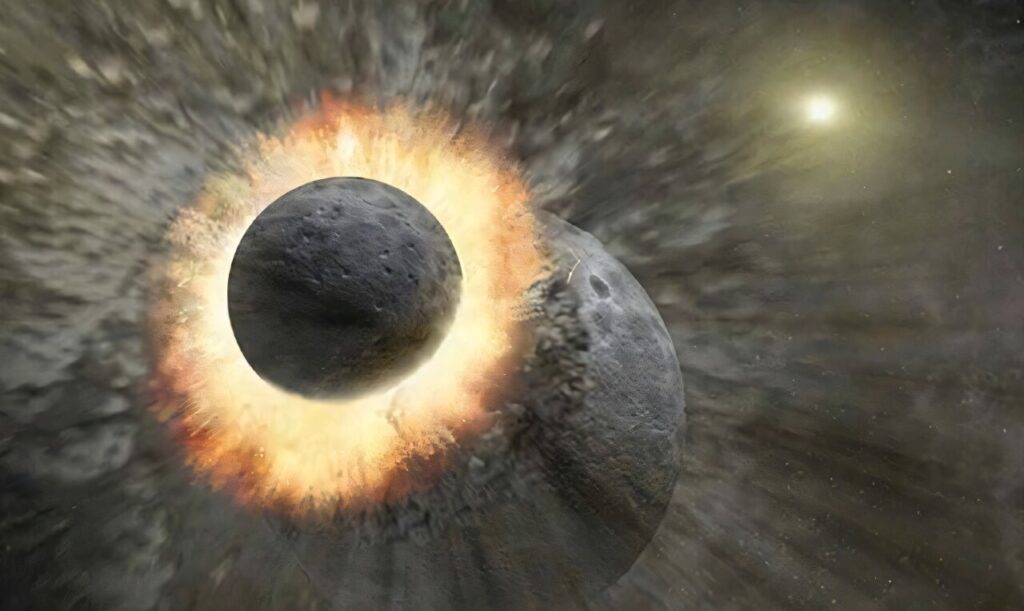
Friction normally slows things down. But atmospheric drag makes a satellite lose orbital energy and fall into a lower orbit — and lower orbits are faster. So although drag initially slows the spacecraft, the resulting orbital decay can leave it moving faster around Earth. Scientists were analysing this effect as early as 1958.

Atmospheric drag always removes orbital energy, but gravity can leave a decaying satellite moving faster after it falls into a lower orbit.

By Terra Daily Editorial Team · Aug 15, 2026

Space Travel

NASA's Psyche spacecraft used Mars as a gravitational slingshot on 15 May 2026, skimming within 2,864 miles of the surface and walking away 1,000 miles per hour faster — burning no fuel in the process — on its way to an asteroid that may be the exposed metal core of a dead planet

NASA's Psyche probe gained 1,000 mph from Mars without using propellant during the flyby. The physics is exact, while the asteroid's core identity remains a hypothesis.

By Terra Daily Editorial Team · Aug 13, 2026

What’s up in

Terra Daily

Earth science, climate impacts, ecosystems, agriculture, forests, and the broad environmental changes shaping life on a changing planet.

What’s up in

Shake and Blow

Earthquakes, volcanoes, severe weather, fire, tectonics, disaster response, and the natural hazards reshaping communities and landscapes.

What’s up in

Water World

Oceans, rivers, polar ice, water systems, marine life, and the environmental changes affecting the planet's blue and frozen regions.

About Terra Daily

News about planet Earth.

Terra Daily is an independent publication covering planet Earth, natural hazards, water systems, ecosystems, climate impacts, and the science behind life on a changing planet. The site pairs a deep archive with current reporting on the research, communities, policy shifts, and environmental events shaping Earth's living and physical systems. We employ modern AI technologies to support our editorial workflows; every published piece is editorially directed and reviewed.

More about us →

The Terra Daily Newsletter

Highlights of the week in Terra Daily, natural hazards, and water systems — delivered to your inbox by email.

Read recent issues on Substack →