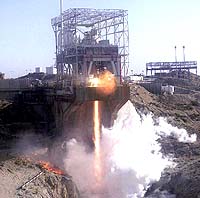
The RS-68 is the largest liquid-oxygen and liquid-hydrogen engine in the world and the first new rocket engine designed in the U.S. since the Space Shuttle main engine.
The RS-68 is the largest liquid-oxygen and liquid-hydrogen engine in the world and the first new rocket engine designed in the U.S. since the Space Shuttle main engine. |
The RS-68 is the largest liquid-oxygen and liquid-hydrogen engine in the world and the first new rocket engine designed in the U.S. since the Space Shuttle main engine. The engine was designed by Boeing Rocketdyne Propulsion and Power and will provide first-stage propulsion for the Boeing Delta IV launch vehicle, scheduled for its maiden voyage in 2002.
Thiokol has been building nozzles for solid propulsion motors since the late 1950s. The company was awarded a contract from Boeing for engineering and manufacturing development of the RS-68 nozzle in 1998. The Boeing RS-68 engine is the first use of Thiokol nozzles in a liquid engine application.
Thiokol's RS-68 nozzle is constructed of composite phenolic materials exposed to gas temperatures in excess of 6,000 degrees F. Each test evaluated the performance and overall dynamic response in this severe environment. Four nozzle test firings are planned over the next several months as part of the flight certification program.
Thiokol Propulsion Corp., one of four operating companies within ATK's Aerospace Group, was acquired by ATK from Alcoa, Inc. in April 2001. The company is a leading supplier of propulsion systems for space launch vehicles and tactical missile systems.
Related Links
 Sniffing Out Those Hydrogen Leaks
 Torrance - May 14, 2001