
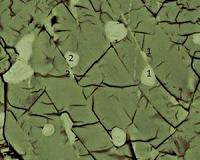
A new study led by Britain's University of Plymouth offers insight on the mechanisms behind earthquakes 25 or more miles below the surface.
Little is known about deep earthquakes, largely because their effects are generally hidden underground, but the study suggests that ruptures may be encouraged by the interaction of different shear zones moving slowly and aseismically, indicating movement without accompanying seismic shock. The interaction loads the adjacent blocks of stiff rocks in the deep crust until they can no longer sustain the rising stress, and a rupture prompts an earthquake. The study suggests that slow but repeating cycles of deformation on the shear zones bring accumulated stress, punctuated by episodic earthquakes.
The study, underwritten by Britain's Natural Environment Research Council, was led by scientists from the University of Plymouth and Norway's University of Oslo in Norway's Lofoten Islands, and published this week in the scholarly journal Nature Communications. They spent several months in the region, analyzing exposed rock pristine pseudotachylytes — solidified melt produced during seismic slips and regarded as "fossil earthquakes" — which decorate fault sets linking shear zones.
"The Lofoten Islands provide an almost unique location in which to examine the impact of earthquakes in the lower crust," said Dr. Lucy Campbell of the University of Plymouth. "By looking at sections of exposed rock less than 15 meters [49.2 feet] wide, we were able to see examples of slow-forming rock deformation working to trigger earthquakes generated up to 30 kilometers [18.6 miles] beneath the surface."
