
WATER WORLD
'Twilight Zone' could help preserve shallow water reefs
by Staff Writers
Brisbane, Australia (SPX) Feb 07, 2019

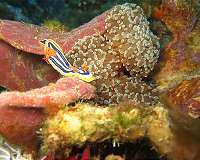
Coral in the 'twilight zone'

Corals lurking in deeper, darker waters could one day help to replenish shallow water reefs under threat from ocean warming and bleaching events, according to researchers.

The University of Queensland and the ARC Centre of Excellence for Coral Reef Studies examined corals from the ocean's 'twilight zone' at depths below 30 metres.

Dr Gal Eyal, the Marie Sklodowska-Curie fellow at UQ's Marine Palaeoecology Lab, said the mesophotic zone is deeper than recreational SCUBA diving limitations.

"Corals in this zone are often overlooked or ignored but occupy at least 50 per cent of unique coral habitats," Dr Eyal said.

"Light is limited when descending to these depths, so it's a major factor in the livelihood of the ecosystems there.

"We showed that strictly mesophotic coral can grow much faster when it is transplanted to a shallow reef light environment.

"In deeper waters the corals experience light limitations, so they allocate their energy accordingly."

Dr Eyal said the improved performance of the corals collected from 40 to 50m depth and placed in shallow water conditions was promising, but more research was needed to better understand the physiological processes controlling the phenomena.

"This study shows that while there are restrictions in nature currently preventing the persistence of these corals in shallow reefs, the potential is there."

"The 'twilight-zone' needs to be considered an important zone of coral reefs, instead of the marginal environment it is often viewed as today."

Dr Eyal said the deep could reveal many more secrets that could help researchers understand coral reefs.

"Coral reefs are diminishing worldwide due to global warming, so we strongly advocate for the protection and conservation of these deeper and unique environments in order to secure a future for coral reefs."

Research paper


Related Links
University of Queensland
Water News - Science, Technology and Politics

WATER WORLD
Variations in seafloor create freak ocean waves
Tallahassee FL (SPX) Feb 04, 2019
Florida State University researchers have found that abrupt variations in the seafloor can cause dangerous ocean waves known as rogue or freak waves - waves so catastrophic that they were once thought to be the figments of seafarers' imaginations. "These are huge waves that can cause massive destruction to ships or infrastructure, but they are not precisely understood," said Nick Moore, assistant professor of mathematics at Florida State and author of a new study on rogue waves. The study is ... read more

Comment using your Disqus, Facebook, Google or Twitter login.

Share this article via these popular social media networks
del.icio.usdel.icio.us DiggDigg RedditReddit GoogleGoogle

WATER WORLD
Study reveals wildlife is abundant in Chernobyl

Chinese chemical firm 'misled' investigators over deadly blast

US sends 3,750 more troops to Mexico border: Pentagon

Refugees struggle for work amid Greek jobs drought

WATER WORLD
3D printed tires and shoes that self-repair

Researchers use artificial neural networks to streamline materials testing

Observing hydrogen's effects in metal

Atom probe tomography reveals chinks in iron crystals that can 'heal'

WATER WORLD
Ramped up efforts needed to protect the world's inland waters

Study: Much of the surface ocean will shift in color by end of 21st century

MERMAIDs reveal secrets from below the ocean floor

Variations in seafloor create freak ocean waves

WATER WORLD
Lost ice age found in the African desert

Two-thirds of Himalayan glaciers could melt, study warns

Antarctic meltwater streams shed light on longstanding hydrological mystery

Austrian lake offers climate haven for Dutch ice skaters

WATER WORLD
Insecticides blamed for honeybee deaths in California almond groves

Mites, not a virus, are the main threat to bees, study finds

'Radical rethink' needed to tackle obesity, hunger, climate: report

Weather at key growth stages predicts Midwest corn yield and grain quality

WATER WORLD
Revising the history of big, climate-altering volcanic eruptions

Volcanic growth 'critical' to the formation of Panama

Dark fiber lays groundwork for long-distance earthquake detection and groundwater mapping

Two dead in Australia floods as fresh warning issued

WATER WORLD
C.Africa government inks peace deal with militias

New DR Congo seeks to reassure security forces

French air strikes 'repel incursion into Chad from Libya'

Sudan protesters chant 'freedom' as police fire tear gas

WATER WORLD
A taste for fat may have made us human

The Caucasus: Complex interplay of genes and cultures

European colonisation of the Americas killed 10 percent of world population and caused global cooling

Ancient skull provides earliest evidence of modern humans in Mongolia