|
"It's this great big bowl of water that slops around everywhere," said Mark Spalding of the UN Environment Programme's World Conservation Monitoring Centre.
"The open ocean contains 60 percent of the ocean's high seas, which are not owned by anyone. It needs international agreements and policing," Spalding told AFP at the fifth World Parks Congress in the eastern port city of Durban.
The 10-day event has been discussing how to safeguard the world's 100,000 protected areas. One of the main themes of the congress has been the lack of protection for marine areas, only 0.5 percent of which are protected.
Spalding said the situation was in fact even worse because only a tiny fraction of these areas were being managed properly.
"There is probably less than 10 percent that's doing anything useful," he said.
A study published in May showed that 90 percent of the ocean populations of large tuna, swordfish, marlin and other fish species have disappeared. Seven marine species have already gone extinct since 1768 -- the last being the West Indian monk seal in 1952.
"About 75 percent of fish stocks are right at their limit and that's a conservative figure," Spalding said.
The congress heard earlier this week that the number of protected marine sites needed to be increased to 12 percent within in the next decade to prevent widescale damage on sea and land.
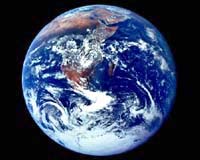
The ocean contains 97 percent of the earth's water, drives climate and weather, regulates temperature and generates more than 70 percent of the oxygen in the atmosphere.
It is home to most of the life on earth, including nearly all major groups of animals, plants and microbes, comprising 97 percent of the biosphere.
Spalding said special attention should be given to boosting regional cooperation on policing and regulating activities on the high seas.
The lack of action so far to protect oceans was due to the difficulty of policing and a perception that it was not really necessary, Spalding said.
"The global community sees the ocean as a flat surface. There is this sort of myth that somehow the sea is endless and we can just keep on taking and taking," he said
TERRA.WIRE |