
 |
 |
 |
 |
 |
 |
 |
 |
 |
 |

| . |  |
. |
Wave Of Marine Species Extinctions Feared
Scientists once thought the oceans were so vast there was little risk of marine species becoming extinct; they no longer believe that theory. Now Ellen Pikitch, executive director of the Pew Institute for Ocean Science, says the Earth may on the cusp of "a gathering wave of ocean extinctions." Her alarming view is shared by many scientists, including Samuel Gruber, a University of Miami professor who has spent two decades studying lemon sharks that breed in the Bahamas. But the mangroves that provide food and protection for the sharks are being destroyed to make way for resort development. "At the end of my career, I get to document the destruction of the species I've been documenting for 20 years," he told the Washington Post. "Wonderful." Biologists note that of the 21 marine species that have become extinct in the past 300 years, 16 have occurred since 1972. Scientists blame a combination of the post World War II industrialization of the world's fishing industry, a planet-wide boom in oceanfront development and global warming for causing the Earth's fish populations to plummet. All rights reserved. Copyright 2005 by United Press International. Sections of the information displayed on this page (dispatches, photographs, logos) are protected by intellectual property rights owned by United Press International. As a consequence, you may not copy, reproduce, modify, transmit, publish, display or in any way commercially exploit any of the content of this section without the prior written consent of by United Press International. Related Links TerraDaily Search TerraDaily Subscribe To TerraDaily Express  Anemone Armies Battle To A Standoff
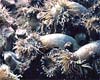 Davis CA (SPX) Aug 24, 2005
Clashing colonies of sea anemones fight as organized armies with distinct castes of warriors, scouts, reproductives and other types, according to a new study.
|
|
| |||||||||
| The content herein, unless otherwise known to be public domain, are Copyright 1995-2016 - Space Media Network. All websites are published in Australia and are solely subject to Australian law and governed by Fair Use principals for news reporting and research purposes. AFP, UPI and IANS news wire stories are copyright Agence France-Presse, United Press International and Indo-Asia News Service. ESA news reports are copyright European Space Agency. All NASA sourced material is public domain. Additional copyrights may apply in whole or part to other bona fide parties. Advertising does not imply endorsement, agreement or approval of any opinions, statements or information provided by Space Media Network on any Web page published or hosted by Space Media Network. Privacy Statement All images and articles appearing on Space Media Network have been edited or digitally altered in some way. Any requests to remove copyright material will be acted upon in a timely and appropriate manner. Any attempt to extort money from Space Media Network will be ignored and reported to Australian Law Enforcement Agencies as a potential case of financial fraud involving the use of a telephonic carriage device or postal service. |

