
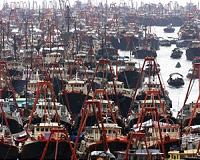
EU fishing fleets are increasingly anxious about their future access to teeming British waters as Britain prepares to trigger the two-year countdown to its exit from the bloc.
Fleets from nine EU countries including France, Germany and Spain have banded together in a newly-created European Fisheries Alliance, formerly launched at the European Parliament last week, warning of steep losses if divorce proceedings turn bitter.
Alain Vidalies, France's secretary of state for fisheries, stressed in Paris last week "the importance of preserving fairness between European and British fleets" post-Brexit.
European fleets obtain one-third of their catch in the exclusive economic zone around the British Isles, and loss of access to those waters could cut their profits in half in the short term, the fishing alliance says.
In the long term, EU fleets could lose a combined 500 to 600 vessels if they were excluded from British waters, representing 15 percent of the total, and up to 3,000 fleet jobs.
Industry officials are pressing for negotiations on Britain's post-Brexit future to include continued access to British waters.
"If you don't want to pay 30 percent tariffs you will have to negotiate. Negotiations should be tied to access to the market," Ivan Lopez Van der Veen, who represents the Spanish fishing association Pesquera Ancora, said at the EU Parliament last week.
– Linked fortunes –
Non-British EU vessels currently land almost eight times more fish and shellfish by weight from British waters than UK boats, or almost five times more by value, said Ian Napier, senior policy advisor at the NAFC Marine Centre, based on Scotlands' Shetland Islands.
From 2011 to 2015, European fleets caught 700,000 tonnes of fish and seafood in British waters, valued at about 530 million pounds (612 million euros, $660 million), the NAFC said in a report published in January.
British vessels, by contrast, caught just 92,000 tonnes, valued at 110 million pounds, in other EU waters.
And the European Fisheries Alliance notes that Britain cannot eat all the salmon, lobster, scallops and other fish and seafood its boats produce: about 70 percent of production, worth a billion euros a year, is exported to its European partners.
Despite this, a UK parliament White Paper published in December found that the majority of fish consumed in Britain are imported.
"Continued access to free, or preferential, trade in fish and seafood will therefore be crucial for the seafood industry and UK consumers" after Brexit, the paper said.
And depending on whether Britain negotiates a "hard" or "soft" exit, the viability of dozens of fishing centres, from Concarneau in France and Rostock in Germany to Galway in Ireland or Gdansk in Poland, could be at stake.
But others say that leaving the EU would give Britain a chance to revive homegrown fleets.
"Brexit is an opportunity for the UK to revitalise its fishing industry, stabilise threatened ecosystems and create thousands of new jobs," said Lasse Gustavsson, executive director in Europe for Oceana, an environmental advocacy group.
"But this will only happen if overfishing is stopped."
Dead zones may threaten coral reefs worldwide
Dead zones affect dozens of coral reefs around the world and threaten hundreds more according to a new study by Smithsonian scientists published in Proceedings of the National Academy of Sciences. Watching a massive coral reef die-off on the Caribbean coast of Panama, they suspected it was caused by a dead zone–a low-oxygen area that snuffs out marine life–rather than by ocean warming or acidi … read more
