 |
 |
 |
 |
 |
 |
 |
 |
 |
 |

| . |  |
. |
Drought, Anthrax Threaten Rare Zebra With Extinction
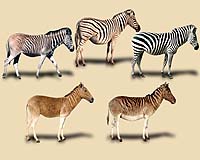
Nairobi (AFP) Jan 22, 2006 Outbreaks of deadly anthrax exacerbated by east Africa's searing drought have killed scores of Grevy's zebras in Kenya and are threatening the endangered species with extinction, wildlife officials and scientists said Sunday. The zebras, known for their narrow stripes and large ears, are dying of anthrax at an alarming rate in the scrub-peppered, sprawling plains in and around Kenya's central Samburu National Reserve, one of their last remaining habitats, and more are feared to have perished further north, they said. "They have died in the dozens in the northern part of the reserve, and their carcasses are littered all over," said Fred Perezo, who administers Samburu for the Kenya Wildlife Service (KWS). "They face extinction." Fewer than 5,000 Grevy's zebras are believed to live in the wild, nearly all of them in the vicinity of Samburu, about 230 kilometers (145 miles) north of Nairobi, and further north towards Kenya's border with Ethiopia. The region is one of the worst-affected by the drought that has killed at least 40 people, threatens millions with famine, decimated livestock herds and placed Kenya's world-renowned wildlife at risk. In addition to drying up watering holes and making food scarce, the drought has stirred up naturally occurring anthrax spores from the parched earth which are now exacting a heavy toll on the Grevy's zebra, a species less hardy than its mountain and plains cousins, officials said. According to a report prepared by KWS and the African Wildlife Foundation (AWF), an acute form of equine anthrax began appearing in animals around Samburu in December as the zebras began mixing with livestock in competition for dwindling water and pasture. In the course of one week in early December, seven Grevy's zebras were found dead in the reserve and many of their carcasses indicated that blood had oozed from their body orifices before death, a characteristic of anthrax, it said. "It is very unusual for this species to die in large numbers," the AWF said, warning that immediate steps needed to be taken to prevent the anthrax from spreading. Since that report was issued in late December, many more Grevy's zebras have died, according to Perezo, who said urgent action was needed to remove and destroy their anthrax-contaminated carcasses in order to reduce the chance of other animal and human infection. "The carcasses are increasing the chances of transmission of the disease," he told AFP. Conservationists say the Grevy's zebra population has decreased from 15,000 in 1970 to less than 5,000 that currently live in arid habitats in northern Kenya, southern Ethiopia and western Somalia. While the zebras are prey for lions, cheetahs and hyenas, their population was hit hardest by hunting due to the demand in the fashion world for the animals' striking black-and-white hides. In the 1970s, the Convention on International Trade in Endangered Species of Wild Fauna and Flora banned the trade in Grevy's zebra pelts, and their numbers began to increase after 1977 when Kenya, home to the largest populations, banned hunting. In 2000, the species was listed as "endangered" on the World Conservation Union's Red List of Threatened Animals. Grevys zebra, named after Jules Grevy, a 19th-century French president who received one as a gift from Ethiopia's Emperor Menelik in 1882, are the largest, wildest and most difficult to tame of the three zebra species. In addition those living in the wild in east Africa, about 220 Grevy's zebras are housed in zoos around the world.
Source: Agence France-Presse Related Links  'Horror Of Hunger' Drives Drought-Hit Somalis To Mogadishu
 Mogadishu (AFP) Jan 22, 2006
Tens of thousands of desperate Somalis have converged on Mogadishu over the past two months, abandoning their homes in the lawless nation's drought-stricken south and center to beg for food in the capital as famine looms across east Africa. |
|
|

| The content herein, unless otherwise known to be public domain, are Copyright 1995-2006 - SpaceDaily.AFP and UPI Wire Stories are copyright Agence France-Presse and United Press International. ESA PortalReports are copyright European Space Agency. All NASA sourced material is public domain. Additionalcopyrights may apply in whole or part to other bona fide parties. Advertising does not imply endorsement,agreement or approval of any opinions, statements or information provided by SpaceDaily on any Web page published or hosted by SpaceDaily. Privacy Statement |