|
 |
 |
 |
 |
 |
 |
 |
 |
 |

| . |  |
. |
Endeavour Carries Millions Of Basil Seeds Up And Back
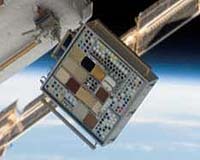
Houston TX (SPX) Aug 17, 2007 So, can you make spaghetti sauce in space? Well, you'll need several ingredients, but you're sure to have plenty of one: STS-118 mission specialist Barbara Morgan has carried millions of basil seeds with her on board space shuttle Endeavour to the International Space Station. These seeds are joining three million other basil seeds that have been flying on the station for a year and are waiting for Morgan to bring them back to Earth. Materials on the International Space Station Experiment 3 and 4, known as MISSE - 3 and 4, are the third and fourth in a series of suitcase-sized test beds containing many different materials, including seeds, placed outside the station to test how they withstand the harsh environment of space. Some of the basil seeds will remain on the station to be grown in zero gravity. The rest will be returned to Earth and divided into kits for students to study seed germination rates -- how fast the space basil grows compared to Earth basil. Students will also learn more about the scientific method -- techniques for investigating phenomena and acquiring new knowledge about a subject. To get the seeds to classrooms, NASA works with the George W. Park Seed Company in Greenwood, S.C. The company began its relationship with NASA and student experiments in the 1980s with the Space Exposed Experiment Developed for Students, or SEEDS program. During that experiment, more than 12 million tomato seeds flew on the Long Duration Exposure Facility -- deployed in 1984 by space shuttle Challenger to provide long-term data on the space environment and its effects on space systems and operations. "I think the kids will be excited to work with something that's been in space. And to know, for this experiment, there are no answers in the back of a book," said Miria Finckenor, an engineer at NASA's Marshall Space Flight Center in Huntsville, Ala., and one of the Materials on the International Space Station Experiment investigators. "We hope to get more students interested in science and reach as many as we did with the tomato seeds experiment," she said. More than 40,000 classrooms in all 50 states and 30 foreign countries participated in that program. In addition to the educational benefits, the Materials on the International Space Station Experiments, managed by NASA's Langley Research Center in Hampton, Va., are contributing a wealth of data on spacecraft materials back to the International Space Station Program, NASA's Constellation Program and a number of defense programs. The first two external materials science experiments on the space station flew from 2001 to 2005, and another flew on the station a year later. Upon their return to Earth, the samples were examined by principal investigator William Kinard at Langley, Finckenor and many other researchers involved in the project. One of the most significant results from these test beds is confirmation that the contamination control for the station -- the method for tracking whether scientific instruments, windows, radiators and other hardware is staying clean from contaminants such as dust, dirt, or hair -- is working. The experiments showed that samples of the glass used in station windows were better than 90 percent clear, and samples of the same white thermal coatings used on station radiators looked like new, even after four years in space. "We want to keep the windows clean so the astronauts can not only look outside but are also able to snap good photographs of Earth," Finckenor said. "We also want to keep the thermal coatings white so that the thermal control system -- which includes the radiators that keep the station and its crew at comfortable temperature -- works properly." The sixth materials experiment, or MISSE-6, will fly to the station on board STS-123, scheduled for launch in early 2008. It will carry 140 samples from the Marshall Center, including materials such as the heatshield, radiation shielding and data matrix identification markers for the Orion crew exploration vehicle. That vehicle is capable of carrying up to six astronauts to low Earth orbit atop the in-line, two-stage rocket, Ares I crew launch vehicle. Community Email This Article Comment On This Article Related Links Growing seeds from space Space Tourism, Space Transport and Space Exploration News
 ATK Receives To Develop And Support Test Flights For NASA's Ares I Crew Launch Vehicle First Stage
 Minneapolis MN (SPX) Aug 16, 2007
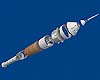
The National Aeronautics and Space Administration (NASA) have announced that Alliant Techsystems has received a $1.8 billion contract for the design, development, test and evaluation (DDT and E) of the first stage of the agency's next-generation human space flight vehicle - the Ares I. The multi-year development contract extends through June 2013 and includes flight tests beginning in 2009. |
|
|

| The content herein, unless otherwise known to be public domain, are Copyright 1995-2007 - SpaceDaily.AFP and UPI Wire Stories are copyright Agence France-Presse and United Press International. ESA Portal Reports are copyright European Space Agency. All NASA sourced material is public domain. Additional copyrights may apply in whole or part to other bona fide parties. Advertising does not imply endorsement,agreement or approval of any opinions, statements or information provided by SpaceDaily on any Web page published or hosted by SpaceDaily. Privacy Statement |