|
 |
 |
 |
 |
 |
 |
 |
 |
 |

| . |  |
. |
Tiny Fuel Cells May Provide Power To Many Consumer Goods
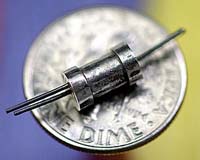
Pittsburgh PA (SPX) Feb 19, 2006 Carnegie Mellon University's Prashant Kumta, a professor of materials science and biomedical engineering, is developing microscale fuel cells that use methanol instead of expensive and unstable hydrogen, which is difficult to produce in large quantities. "We envision a fuel cell system about the size of a cigarette lighter that could be refueled by inserting a small cartridge of methanol. So we are essentially developing a more efficient catalyst," Kumta said. At present, most methanol fuel cells use noble metals like platinum and ruthenium for power. But researchers say those metals are extremely expensive. The direct methanol fuel cell is powered by methanol and water. When the methanol and water make contact with a catalyst in the fuel cell, they break down into carbon dioxide, positively charged protons and negatively charged electrons. The protons are attracted by a special membrane that allows them to pass through, while blocking the path of the electrons. The electrons must pass through an external circuit to get around the membrane, creating an electrical current. The fuel cell produces carbon dioxide, which is vented away, and water, which can be recycled to use with additional methanol. "One problem with these fuel cells is that not all the methanol gets properly catalyzed and that methanol can seep through the membrane, reducing its efficiency," Kumta said. Kumta and his group are developing nanostructured catalyst compositions using novel chemistry methods that exhibit excellent catalytic activity compared to conventional standards catalysts. The technology is currently being extended to develop the nanostructured catalysts on innovative nano-crystalline support systems that will likely exhibit much better reliability and stability compared with present systems, according to Kumta. Portable electronic devices, such as cell phones, personal digital assistants and laptop computers, may one day become the first widely used consumer items to take advantage of fuel cells, industry analysts report. Related Links Carnegie Mellon University 
|
|
|
| The CONTENTS herein, unless otherwise known TO be PUBLIC domain, are Copyright 1995-2005 - SpaceDaily. AFP AND UPI Wire Stories are copyright Agence France-Presse AND United Press International. ESA Portal Reports are copyright European SPACE Agency. ALL NASA sourced material IS PUBLIC domain. Additional copyrights may apply IN whole OR part TO other bona fide parties. Advertising does NOT imply endorsement, agreement OR approval OF ANY opinions, statements OR information provided BY SpaceDaily ON ANY web page published OR hosted BY SpaceDaily. Privacy STATEMENT |