|
 |
 |
 |
 |
 |
 |
 |
 |
 |

| . |  |
. |
Tracking Electrons At Trillionths Of A Second
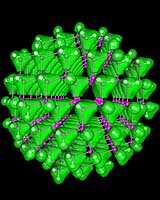
Lausanne, France (SPX) Nov 24, 2005 Researchers at the EPFL (Ecole Polytechnique Federale de Lausanne) have developed a new machine that can reveal how electrons behave inside a single nano-object. The results from initial tests on pyramidal gallium-arsenide quantum dots are presented in an article in the November 24 issue of Nature. Hiding in the lab behind a dramatic black curtain, the hardware setup is not particularly imposing. It doesn't look expensive. Nonetheless, this machine in EPFL's Laboratory of quantum optoelectronics took four years to perfect and represents an equipment investment of more than a million Swiss francs. It is an ingenious combination of technologies onto a single powerful platform. It will improve our understanding of the dynamics that rule the nanoscale world, perhaps opening doors to exploiting the physics of nanoscale phenomena for practical ends. Even the most sophisticated methods used to explore material properties and dynamics run into limits when applied at the nanoscale. Current techniques either have good spatial resolution (down to tens of nanometers or below) or an ultrafast time resolution (down to picoseconds), but not both. At least not until now. The machine developed by Professor Benoit Deveaud-Pledran and his EPFL colleagues is the first tool that can track the passage of an electron in a nanostructure � at a time scale of ten picoseconds and a spatial resolution of 50 nanometers. The EPFL researchers replaced the standard electron gun filament on an off-the-shelf electron microscope with a 20 nanometer-thick gold photocathode. The gold is illuminated by an ultraviolet mode-locked laser, generating an electron beam that pulses 80 million times per second. Each pulse contains fewer than 10 electrons. The electrons excite the sample, causing it to emit light. The spectroscopic information is collected and analyzed to recreate the surface morphology and to trace the path the electrons follow through the sample. Deveaud-Pledran and his colleagues tested their new machine on pyramidal quantum dots. These 2-micron-high nano-objects, specially synthesized in the lab of EPFL professor Eli Kapon, contain several different nanostructures, making them ideal test objects. When the electron beam impacts the pyramid, the electrons diffuse towards the closest nanostructure. From there, the diffusion continues until the point of lowest energy is reached -- the quantum dot at the tip of the pyramid. The time traces corresponding to each of these nanostructures reveal just how critical that 10- picosecond time resolution is; with even a 100-picosecond resolution, important information would be lost. The machine will not only give us a glimpse into nanoscale dynamics, but because it will work on any semiconductor, it will also allow researchers to study previously intractable materials. The wide energy range of the electrons in the beam can excite materials that won't luminesce with laser techniques, explains Deveaud-Pledran. "With a laser, you can't get a short enough wavelength to excite diamond or silicon, for example. This machine will." Nanotechnology is widely heralded as the key to the technology of the future -- everything from quantum computing to ultra-dense data storage to quantum cryptography depends on the behavior and control of materials at the nanoscale. "Remember the first portable CD-players?" says Deveaud. "They consumed 4 AA batteries reading a single disk. We improved our understanding of the physics of materials, and now they consume 50 times less energy. As far as the nanoworld is concerned, we still don't understand the dynamics of materials at the nanoscale. I can't tell you exactly what this machine will lead to because that depends on who uses it and what we find. But there's no question that it will help us make progress, and that the potential applications are exciting." "Probing carrier dynamics in nanostructures by picosecond cathodoluminescence" Nature, 24 Nov 2004. M. Merano, S. Sonderegger, A. Crottini, S. Collin, P. Renucci, E. Pelucchi, A. Malko, M. H. Baier, E. Kapon, B. Deveaud1 & J.-D. Ganiere Ecole Polytechnique Federale de Lausanne. Related Links EPFL SpaceDaily Search SpaceDaily Subscribe To SpaceDaily Express  Santa Barbara Researchers Light Up 'Dark' Spins In Diamond
 Santa Barbara CA (SPX) Nov 24, 2005
Researchers at UC Santa Barbara have potentially opened up a new avenue toward room temperature quantum information processing. |
|
|

| The content herein, unless otherwise known to be public domain, are Copyright 1995-2006 - SpaceDaily.AFP and UPI Wire Stories are copyright Agence France-Presse and United Press International. ESA PortalReports are copyright European Space Agency. All NASA sourced material is public domain. Additionalcopyrights may apply in whole or part to other bona fide parties. Advertising does not imply endorsement,agreement or approval of any opinions, statements or information provided by SpaceDaily on any Web page published or hosted by SpaceDaily. Privacy Statement |