
. Earth Science News .


.
POLITICAL ECONOMY
US science policy should focus on outcomes not efficiencies
by Staff Writers
Boston MA (SPX) Feb 21, 2013


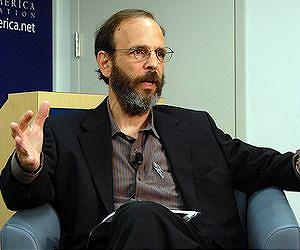
File image: Daniel Sarewitz.

Given the huge investment and power of science and technology in the U.S. it is surprising that more attention isn't paid to the policy decisions that drive the enterprise, said Daniel Sarewitz, co-director of the Consortium for Science, Policy and Outcomes (CSPO) at Arizona State University. What appears to be missing from the equation, he added, is a focus on outcomes.

Sarewitz was speaking at the 2013 American Association for the Advancement of Science (AAAS) annual meeting in Boston.

"Given the power of science and technology to shape and even transform our society, it is extraordinary how little attention is paid to improving our science and technology policy decisions," said Sarewitz. "There are different ways to think about enhancing the capacity of the science and technology enterprise to solve the problems people expect it to solve."

Sarewitz, a Fellow of AAAS and member of its Committee on Scientific Freedom and Responsibility, spoke as part of a panel on Outcome-Oriented Research and Development Strategy. His talk is titled: "Toward Bridging the Duality of Science: Seed-Push, Issue-Driven or 'Encounter'?'"

Sarewitz, who has more than 20 years experience in science policy dating back to his time working on Capitol Hill as a staff member for former congressman George E. Brown, Jr., has written numerous articles and books on this subject. Included among these are his articles on public value mapping with CSPO co-founder Barry Bozeman and his article "Does Science Policy Matter?" for Issues in Science and Technology.

"The standard ways we have of assessing science and technology efforts are not aimed at understanding the outcomes of science in society, but are aimed at maximizing the productivity," said Sarewitz.

"Despite the fact that the advancement of science and the development of technology are unpredictable, we can assess whether programs are appropriately structured for delivering the societal outcomes that we expect them to accomplish. By understanding these distinctions, we can make better decisions."

.


Related Links
Arizona State University
The Economy


Comment on this article via your Facebook, Yahoo, AOL, Hotmail login.

Share this article via these popular social media networks
del.icio.usdel.icio.us DiggDigg RedditReddit GoogleGoogle


Memory Foam Mattress Review

Newsletters :: SpaceDaily Express :: SpaceWar Express :: TerraDaily Express :: Energy Daily
XML Feeds :: Space News :: Earth News :: War News :: Solar Energy News

Get Our Free Newsletters
Space - Defense - Environment - Energy - Solar - Nuclear

...


POLITICAL ECONOMY
EU financial transaction tax divides union
Brussels (UPI) Feb 15, 2013
It's not in force yet but the hotly debated European financial transaction tax has divided the European Union, angered U.S. bankers and threatens jobs in competing business centers in London and 15 other countries that rejected it. The revised FTT law, now before European Parliament, has introduced provisions that will affect firms in countries that are outside the 11-country zone that ... read more


POLITICAL ECONOMY
Four guilty of manslaughter in Italy quake trial

Warning of emergency alert system hacks

No health effects from Fukushima: Japan researcher

Aid trickles into tsunami-hit Solomons despite aftershocks

POLITICAL ECONOMY
Sony bills PS4 console as gaming's future

Sony pressured to change game with PS4 console

Researchers strain to improve electrical material and it's worth it

Explosive breakthrough in research on molecular recognition

POLITICAL ECONOMY
Quantifying Sediment From 2011 Flood Into Louisianas Wetlands

Japanese scientists hunt for groundwater

Landslides delivered preferred upstream habitats for coho salmon

Middle East river basin has lost Dead Sea-sized quantity of water

POLITICAL ECONOMY
Ice age extinction shaped Australian plant diversity

European sat data confirms UW numbers that Arctic is on thin ice

NASA Scientists Part of Arctic Sea Ice Study

Rapid changes in Arctic ecosystem during 2012 ice minimum

POLITICAL ECONOMY
Marsh plants actively engineer their landscape

Advance promises to expand biological control of crop pests

Buffaloes a divisive link to Hong Kong's past

Mexico to slaughter a half million chickens over bird flu

POLITICAL ECONOMY
Flood research shows human habits die hard

Indonesia floods, landslides kill 17

Mystery gold gifts for tsunami-wracked Japan port

Shimmering water reveals cold volcanic vent in Antarctic waters

POLITICAL ECONOMY
South Sudan president retires over 100 army generals

Pistorius shooting puts spotlight on S.African gun violence

US warns of tensions on Sudan-S.Sudan border

Jane Goodall: chimp scientist turned activist

POLITICAL ECONOMY
Tiny mutation had big evolutionary impact

Bilingual babies get good at grammar

UF researchers include humans in most comprehensive tree of life to date

The last Neanderthals of southern Iberia did not coexist with modern humans


The content herein, unless otherwise known to be public domain, are Copyright 1995-2012 - Space Media Network. AFP, UPI and IANS news wire stories are copyright Agence France-Presse, United Press International and Indo-Asia News Service. ESA Portal Reports are copyright European Space Agency. All NASA sourced material is public domain. Additional copyrights may apply in whole or part to other bona fide parties. Advertising does not imply endorsement,agreement or approval of any opinions, statements or information provided by Space Media Network on any Web page published or hosted by Space Media Network. Privacy Statement