|
 |
 |
 |
 |
 |
 |
 |
 |
 |

| . |  |
. |
Reservoirs May Accelerate Spread Of Invasive Aquatic Species
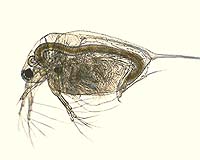
Just as disturbance makes a landscape susceptible to invasion by alien plant species, the construction of reservoirs around the globe could be contributing to the accelerating spread of exotic aquatic species, according to a Forum article in the June 2005 issue of BioScience. John A. Havel of Southwest Missouri State University and Carol Eunmi Lee and M. Jake Vander Zanden of the University of Wisconsin survey evidence indicating that the physical and biological properties of reservoirs make them more likely to be invaded by exotic species than natural lakes. The researchers point to cases in which reservoirs are believed to have facilitated the rapid spread of invasive species. The authors note that reservoir construction often leads to many-fold increases in the area of standing water in a region and that reservoirs typically replace varied stream habitats with habitats more similar to each other. Compared to natural lakes, reservoirs are usually shallower, more connected to other water bodies, and more laden with suspended and dissolved solids; they also have a higher and more variable flushing rate. Moreover, they typically contain unstable, recently assembled communities of stocked fish. An ecological hypothesis known as the fluctuating resource availability hypothesis suggests that these characteristics will enhance the susceptibility of reservoirs to invasion. Because reservoirs are more saline that freshwater lakes, Havel, Lee, and Vander Zanden propose they could provide a haven that helps invaders from saline and brackish habitats adapt to fresh water. Several invasive species are suspected to have benefited from the use of reservoirs as avenues, including Daphnia lumholtzi, a water flea from the Old World tropics, and the copepod Eurytemora affinis. Some evidence indicates that zebra mussels, an economically important invasive species, may also have made use of reservoirs to spread. Havel, Lee, and Vander Zanden argue for research aimed at comparing rates of invasion in freshwater lakes and reservoirs that are in similar geographic regions, to determine whether the rate in reservoirs is indeed higher, as predicted. Related Links American Institute of Biological Sciences Southwest Missouri State University TerraDaily Search TerraDaily Subscribe To TerraDaily Express  Dinosaur Fossil Bone Leads To Gender, Age Determinations
 Raleigh NC (SPX) Jun 03, 2005
It's a girl.. and she's pregnant! Paleontologists at North Carolina State University have determined that a 68 million year-old Tyrannosaurus Rex fossil from Montana is that of a young female, and that she was producing eggs when she died. |
|
|
| The content herein, unless otherwise known to be public domain, are Copyright 1995-2016 - Space Media Network. All websites are published in Australia and are solely subject to Australian law and governed by Fair Use principals for news reporting and research purposes. AFP, UPI and IANS news wire stories are copyright Agence France-Presse, United Press International and Indo-Asia News Service. ESA news reports are copyright European Space Agency. All NASA sourced material is public domain. Additional copyrights may apply in whole or part to other bona fide parties. Advertising does not imply endorsement, agreement or approval of any opinions, statements or information provided by Space Media Network on any Web page published or hosted by Space Media Network. Privacy Statement All images and articles appearing on Space Media Network have been edited or digitally altered in some way. Any requests to remove copyright material will be acted upon in a timely and appropriate manner. Any attempt to extort money from Space Media Network will be ignored and reported to Australian Law Enforcement Agencies as a potential case of financial fraud involving the use of a telephonic carriage device or postal service. |