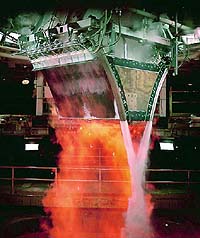
All test objectives appear to have been met, pending final data review. Post-test inspections are in-work. The third and final test in this series is planned to occur in about two weeks.
All test objectives appear to have been met, pending final data review. Post-test inspections are in-work. The third and final test in this series is planned to occur in about two weeks. |
The test series is a unique opportunity for NASA to effectively gain valuable experience and data from existing commercial technology.
EMAs electronically regulate the amount of propellant (fuel and oxidizer) flow in the engine. The technology is a potential alternative and improvement to the older hydraulic-fluid systems currently used by the aerospace industry to drive and control critical rocket engine valves.
All test objectives appear to have been met, pending final data review. Post-test inspections are in-work.
The third and final test in this series is planned to occur in about two weeks.
The Space Launch Initiative is managed for NASA by the Marshall Space Flight Center in Huntsville, Ala. It is a research and technology development effort designed to substantially improve safety and reliability, and reduce the high cost of space travel.
Related Links
 Boeing Rocketdyne RS-68 First Flight Engine Go for Launch
 Canoga Park - June 27, 2001