
 |
 |
 |
 |
 |
 |
 |
 |
 |
 |

| . |  |
. |
A Model To Measure Soil Health In The Era Of Bioenergy
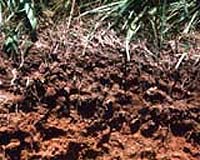
Madison WI (SPX) Nov 24, 2008 One of the biggest threats to farmlands is the loss of soil organic carbon (SOC) and soil organic matter (SOM) from poor land-management practices. The presence of these materials is essential as they do everything from providing plants with proper nutrients to filtering harmful chemical compounds to the prevention of soil erosion. Sustainable management practices for crop residues are critical for maintaining soil productivity, but being able to measure a loss in the quality of soil can be difficult. In an article published in the Soil Science Society of America Journal, a team of USDA-Agricultural Research Service (ARS) scientists detail a method of measuring soil quality using a new model. The researchers combined their knowledge of crop, soil, and climatic data to predict long-term SOM and SOC changes to evaluate the effect of an array of management practices, including crop residue removal, on long-term SOC levels by using this new model. CQESTR, pronounced "sequester," a contraction of "C sequestration" (meaning carbon storage), is a process-based model developed by ARS scientists at the Columbia Plateau Conservation Research Center in Pendleton, OR. Four long-term experiments with several management systems were selected to examine the ability of the model to simulate the long-term effects of management practice on SOC dynamics. These management systems included crop rotations, tillage practices, and organic amendments, as well as crop residue removal. The results showed success in predicting both SOC depletion and sequestration. At a time when the role of agriculture is expanding to include many different roles in society, including the production of cellulosic ethanol, the ability to predict the loss of SOC and SOM is essential to maintaining productive crops. The model can be used to consider a wide range of scenarios before making recommendations or implementing proposed changes to management practices. In conjunction with the local conditions, the model can guide planning and development of sustainable crop and soil management practices. "The development of soil management practices that maintain adequate SOM for nutrient cycling, soil structure stability, and sufficient biomass to prevent erosion is essential for decisions on land use for food, fiber, feed, and bioenergy," says Hero Gollany, one of the article's authors and an ARS soil scientist. The model has great potential to be used by all land managers to guide the amount of crop residue that can be sustainably harvested as feedstock for biomass ethanol and bio-based products without degrading the soil resource, environmental quality, or productivity. More studies are still needed to evaluate the model's performance in predicting the amount of crop residue required to maintain the SOM concentration in different soils under a range of management and climatic conditions. Share This Article With Planet Earth
Related Links Soil Science Society of America (SSSA) Bio Fuel Technology and Application News
 Advanced Cellulose Ethanol Development
 Stockholm, Sweden (SPX) Nov 26, 2008
Swedish researchers at Taurus Energy, SEKAB, Chalmers Technical University and the University of Lund have signed an agreement on development and large scale implementation of a new improved bio-technical process for production of ethanol from lignocellulose feedstocks. |
|
|

| The content herein, unless otherwise known to be public domain, are Copyright 1995-2007 - SpaceDaily.AFP and UPI Wire Stories are copyright Agence France-Presse and United Press International. ESA Portal Reports are copyright European Space Agency. All NASA sourced material is public domain. Additional copyrights may apply in whole or part to other bona fide parties. Advertising does not imply endorsement,agreement or approval of any opinions, statements or information provided by SpaceDaily on any Web page published or hosted by SpaceDaily. Privacy Statement |
 del.icio.us
 Digg
Digg Reddit
 YahooMyWeb
 Google
 Facebook