
 |
 |
 |
 |
 |
 |
 |
 |
 |
 |

| . |  |
. |

Washington (AFP) July 11, 2010 For the average US employee, work takes place in an enclosed office, under fluorescent lighting, with not so much as a ray of sunshine or a whiff of fresh air floating in from the outside world. But a few employees, at companies big and small throughout the United States, are putting in work at very different locations: vegetable gardens sponsored by their firms. Fred Haberman, president and co-owner of Minneapolis public relations firm Haberman & Associates, set up a garden for his 25 employees early last year. He and a colleague were shocked by the effect of obesity on Americans' health -- and health care costs -- and they wondered whether growing food might be a way to influence people's food choices. "It seemed to us that people spend most of their time at work, and why not create an environment where people could, at work, have access to better food, learn more about their food, and engage in the actual production of that food?" he told AFP. The company secured a third of an acre from an employee for the garden, which was promptly dubbed the "Dude Ranch." A few local teenagers make sure everything is watered regularly, but the hard work of tilling, planting, weeding and harvesting is all done by Haberman employees. Every year, employees and their families gather at the site for a harvest celebration called "Dudestock," a company get-together that is far from an "office party," and produce is regularly delivered to the office. "From the end of June through the beginning of October, we're harvesting once a week for our office delivery, and sometimes we harvest twice a week," said Liz Morris Otto, who owns the "Dude Ranch" land. Those who work regularly on the crop get first pick, but every employee has access. "People can just take a bag of lettuce that was cut just that day and take it home and it tastes better and it doesn't cost them money," Haberman said. He spent about 5,000 dollars to set up the garden and sees it as an employee benefit, like health care or a good retirement program, but also as a way to educate people about their food and improve their health long-term. The gardens also offer a way to bring healthy, organic produce to the community -- in 2008, health care company Blue Cross Blue Shield sponsored a garden that produced 500 pounds of vegetables for a local women's shelter. Extra produce from the "Dude Ranch" is also donated, and at PepsiCo's garden, some 25 types of vegetables and nearly 30 types of herbs are given to a local food bank. "Our employees envisioned this garden as a catalyst to integrate healthful, locally grown herbs and vegetables into their everyday lives," Pepsi's CEO Indra Nooyi said in opening the garden in May, 2009. Pepsi might not be known for the health benefits of its products, but Haberman defends employer-sponsored vegetable gardens whereever they crop up. He cites the example of his children, who can now identify a full range of herbs and vegetables, and a young employee at his company who decided to eat more healthy food after working at the Dude Ranch. Morris Otto said workers in her office have even developed a taste for the much-maligned Brussels sprout, which they like to boil and then saute with garlic. Different firms take different approaches -- some offer a patch within the company campus, others buy rural farmland, and some have set up shop in the heart of the city. Chesapeake Energy sponsors a garden that takes up a whole block in Oklahoma City and is tended by more than 350 employees. Workers garden in teams, making all the decisions about what to grow, and can keep their produce or donate it to a local food bank. "This garden is a unique way to show our employees what the land around us can produce when properly and respectfully nurtured," said Aubrey McClendon, Chesapeake's chief executive. The company has even set up a website where employees exchange tips on how best to remove bugs from their plants and swap photos of their produce. "When you have an employer-sponsored garden, a lot of great things happen. People get together and they are learning more about each other," Haberman said. "It's really a no-brainer."
Share This Article With Planet Earth
Related Links Farming Today - Suppliers and Technology

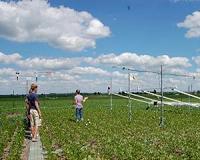 'Business As Usual' Crop Development Won't Satisfy Future Demand
Urbana IL (SPX) Jul 09, 2010 Although global grain production must double by 2050 to address rising population and demand, new data from the University of Illinois suggests crop yields will suffer unless new approaches to adapt crop plants to climate change are adopted. Improved agronomic traits responsible for the remarkable increases in yield accomplished during the past 50 years have reached their ceiling for some ... read more |
|
|
| The content herein, unless otherwise known to be public domain, are Copyright 1995-2010 - SpaceDaily. AFP and UPI Wire Stories are copyright Agence France-Presse and United Press International. ESA Portal Reports are copyright European Space Agency. All NASA sourced material is public domain. Additional copyrights may apply in whole or part to other bona fide parties. Advertising does not imply endorsement,agreement or approval of any opinions, statements or information provided by SpaceDaily on any Web page published or hosted by SpaceDaily. Privacy Statement |

 del.icio.us
 Digg
Digg Reddit
 YahooMyWeb
 Google
 Facebook






