|
 |
 |
 |
 |
 |
 |
 |
 |
 |

| . |  |
. |
Afghan Heroin Floods Europe
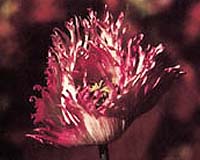
UPI Outside View Commentator Moscow (UPI) Sep 13, 2006 For the umpteenth time now, Afghanistan is breaking all records in opium production, and is ready to flood Europe with first-grade heroin. According to the United Nations Office on Drugs and Crime, the overall area sewn with opium poppies has increased this year by 59 percent, and reached 165,000 hectares against 100,000 hectares last year, while the gross opium harvest will amount to 6,100 tons. Afghan experts maintain that this year opium will be exceedingly rich in morphine. A mere seven kilograms of raw opium will produce one kilogram of heroin. This ratio is very rare. Usually it takes from 10 to 15 kilograms of opium to make this amount. According to UNOCD, last year's harvest -- four thousand tons of raw opium -- produced 400 tons of heroin. The current concentration of morphine in 6,100 tons of raw opium will make it possible to get more than 870 tons of heroin. This is a fantastic scale. It is easy to imagine what amounts of first-grade heavy narcotics Afghanistan will supply to the European and Russian markets, especially considering that the time-tested system of opium harvesting, its procession into morphine and heroin, and the transportation of ready opiates to consumer countries by reliable routes, is as fail-safe as a Swiss watch. Is there a way to combat Afghan drugs? Afghans cannot do this themselves -- either economically, or by force. As for the International Security Assistance Force, it has to have a special U.N. mandate to destroy opium fields and heroin-producing labs. Neither the United States, which leads the anti-terrorist coalition, nor the NATO leaders, who have headed ISAF, will ever request such a mandate from the U.N. Security Council. The United States is even less likely to do so. It stays in Afghanistan not under the U.N. aegis. Why should it make worse the already complicated relations with the local population? Besides, the Russian-European problems with Afghan drugs are too remote for Americans. U.S. Defense Secretary Donald Rumsfeld attributed the growing production of drugs in Afghanistan to increasing demand for them in Europe and Russia. He thinks that Russia and Western Europe should pool efforts in Afghanistan to resolve this problem. UNODC Executive Director Antonio Maria Costa has dispelled the illusions about Europe's potential anti-drug action at the international conference on Afghan drugs in Moscow. In his words, pilot ISAF involvement for the destruction of opium fields and chemical labs did not produce the desired effect in 2005, but only generated tension in relations with the locals. Now the efforts will concentrate exclusively on logistics and training of the Afghan personnel. Inadvertently, Maria Costa also put an end to the myth about "caravans with drugs" next to the U.S. and ISAF troops. There are caravans indeed, but with precursors rather than drugs both in Afghanistan, and especially around it. Precursor is any chemical reagent, which takes part in the production of a toxic chemical by any method. From two to six tons of acetic acid anhydride is a reagent required to produce heroin from one ton of raw opium. Maria Costa said that more than 10,000 tons of this anhydride was brought to Afghanistan last year to produce heroin from the 4,000 tons of raw opium harvested. This was a real caravan of more than 500 twenty-ton trailers. The acetic acid anhydride is not made in Afghanistan, and is only available in China, India, and Russia. It is a real mystery how such caravans can remain unnoticed in Afghanistan with its poor road network. In early July the Afghan authorities were compelled to admit their inability to counter illegal drug production. Late last year they adopted a new law on countering drug production, and set up a whole ministry for this purpose, but all was in vain. It is hard to say how to resolve this problem. A regional UNODC representative for Central Asia said that the transit of drugs does not go down despite the efforts of Central Asian governments to reduce it. Meanwhile, the Afghan opium is gaining in strength. Apparently, Russia and Western Europe will have to hope that if opium fields continue to expand by 50 percent a year, there will be less and less available plough land left. After all, Afghanistan only has some seven million hectares of arable land, 165,000 of which have already been developed. (Pyotr Goncharov is a political commentator for RIA Novosti. This article has been reprinted with permission from the news agency.) (United Press International's "Outside View" commentaries are written by outside contributors who specialize in a variety of important issues. The views expressed do not necessarily reflect those of United Press International. In the interests of creating an open forum, original submissions are invited.)
Source: United Press International Related Links News From Across The Stans News and analysis about the Global War Against Terror at SpaceWar.com  Growing Taliban Insurgency Stalks NATO
 Washington (UPI) Sep 12, 2006
U.S. officials insist resurgent Taliban forces are still not a strategic threat in Afghanistan despite unprecedented troop casualties, a record drug harvest and a claim by one top NATO military commander that daily violence is now more intense than in Iraq. |
|
|

| The content herein, unless otherwise known to be public domain, are Copyright 1995-2006 - SpaceDaily.AFP and UPI Wire Stories are copyright Agence France-Presse and United Press International. ESA PortalReports are copyright European Space Agency. All NASA sourced material is public domain. Additionalcopyrights may apply in whole or part to other bona fide parties. Advertising does not imply endorsement,agreement or approval of any opinions, statements or information provided by SpaceDaily on any Web page published or hosted by SpaceDaily. Privacy Statement |