
 |
 |
 |
 |
 |
 |
 |
 |
 |
 |

| . |  |
. |

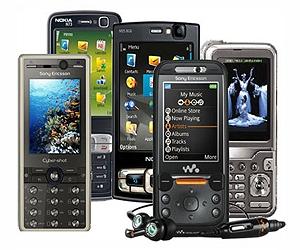
Framingham, Mass. (UPI) Jul 30, 2010 A growing demand for cellphones spurred by economic growth in parts of Africa and the Middle East is proving to be a bonanza for the world's mobile phone industry, but competition is also tougher than before. The worldwide mobile phone market continued to show signs of improvement during the second quarter of 2010, the International Data Corporation Worldwide Quarterly Mobile Phone Tracker report said. Mobile phone vendors shipped a total of 317.5 million units during the second quarter, up 14.5 percent from the 277.2 million units shipped during the second quarter of 2009. For the first half of 2010, vendors shipped a total of 620.6 million units, up 18.5 percent from the 523.5 million units shipped during the first half of 2009. The rise in mobile phone use is part of a major upsurge in telecommunications and security industry products related to business and individual consumers in the Middle East and with varying degrees in Africa. The market was driven primarily by smartphone vendors and companies outside the Top 5 leaders -- Nokia, Samsung, LG Electronics, Research In Motion and Sony Ericsson. Ramon Llamas, senior research analyst with IDC's Mobile Devices Technology and Trends team, called the trend "noteworthy." "Directly contributing to this is growth in the smartphone category. Companies with a strict focus on the smartphone market, like RIM, Apple, and HTC have clearly benefited from steadily increasing user interest. "But it's not just smartphone vendors that have driven the market forward," he said. "It's also the companies with a presence among entry-level handsets and mid-range devices, which have long been the domain of the worldwide leaders," he said. "To dismiss the worldwide leaders would be a mistake," added Llamas. "Each currently enjoys broad distribution, a deep portfolio, and brand recognition. Moreover, each is in the midst of refreshing its respective product portfolio, with greater emphasis on smartphones during the second half of this year. Still, the upward pressure from vendors outside the current top five vendors, particularly Apple and Motorola, will provide tough competition in the quarters to come." Kevin Restivo, senior research analyst with IDC's Worldwide Mobile Phone Tracker program, said that smartphone growth, especially in regions such as Latin America and Asia Pacific excluding Japan, will power the market growth in 2010. While European markets grew due largely to higher smartphone sales, consistent growth in the handset market was buoyed by continued mobile subscriber growth in the Middle East and Africa. Smartphones saw expansion in the region after the 2009 downturn, which was buoyed by price cuts to Nokia models and the introduction of cheaper smartphone models. Nokia faced more competition as Samsung took share away thanks to its entry-level models. Smartphone growth continues unabated in Latin America, IDC said. IDC is a subsidiary of IDG, a leading technology media, research, and events company, and a major provider of market intelligence, advisory services and events for the information technology, telecommunications and consumer technology markets.
Share This Article With Planet Earth
Related Links Space Technology News - Applications and Research

 Amazon introducing two new Kindles: report
Washington (AFP) July 28, 2010 Amazon will introduce two new versions of its Kindle electronic reader on Thursday, including a model that sells for 139 dollars, its lowest price yet, The New York Times reported. The 139-dollar Kindle will be Wi-Fi only, connecting to the online Kindle store by wireless instead of 3G cellular networks like the previous Kindles, the Times said. The other new Kindle will replace the basi ... read more |
|
|
| The content herein, unless otherwise known to be public domain, are Copyright 1995-2010 - SpaceDaily. AFP and UPI Wire Stories are copyright Agence France-Presse and United Press International. ESA Portal Reports are copyright European Space Agency. All NASA sourced material is public domain. Additional copyrights may apply in whole or part to other bona fide parties. Advertising does not imply endorsement,agreement or approval of any opinions, statements or information provided by SpaceDaily on any Web page published or hosted by SpaceDaily. Privacy Statement |

 del.icio.us
 Digg
Digg Reddit
 YahooMyWeb
 Google
 Facebook






