
 |
 |
 |
 |
 |
 |
 |
 |
 |
 |

| . |  |
. |

Raleigh, N.C. (UPI) Sep 8, 2010 U.S. researchers say they've learned how make an aluminum alloy -- a mixture of aluminum and other elements -- that's as strong as steel. North Carolina State University scientists say the search for ever lighter yet stronger materials is important for everything from more fuel-efficient cars to safer airplanes. Yuntian Zhu, professor of materials science at NC State, says nanoscale architecture within the new aluminum alloys give them unprecedented strength but also reasonable plasticity to stretch and not break under stress, a university release reports. The new aluminum alloys have unique structural elements called "grains," each a tiny crystal less than 100 nanometers in size, that make them super-strong and ductile, Zhu says. Bigger is not better in materials, he says, as smaller grains result in stronger materials. The technique of creating these nanostructures can be used on many different types of metals, Zhu says. He says he is working on strengthening magnesium, a metal even lighter than aluminum, and is working with the Department of Defense to make magnesium alloys strong enough to be used as body armor for soldiers.
Share This Article With Planet Earth
Related Links Space Technology News - Applications and Research

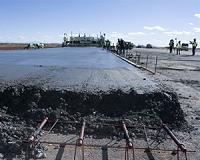 Bacteria could make self-healing concrete
Delft, Netherlands (UPI) Sep 1, 2010 Concrete might heal its own hairline fractures - as living bone does - if bacteria are added to the wet concrete during mixing, European researchers say. Cracks in concrete surfaces make them vulnerable, allowing water and tag-along aggressive chemicals in, says Henk Jonkers of Delft University of Technology in the Netherlands. Patching cracks in old concrete is a time-consumin ... read more |
|
|
| The content herein, unless otherwise known to be public domain, are Copyright 1995-2010 - SpaceDaily. AFP and UPI Wire Stories are copyright Agence France-Presse and United Press International. ESA Portal Reports are copyright European Space Agency. All NASA sourced material is public domain. Additional copyrights may apply in whole or part to other bona fide parties. Advertising does not imply endorsement,agreement or approval of any opinions, statements or information provided by SpaceDaily on any Web page published or hosted by SpaceDaily. Privacy Statement |

 del.icio.us
 Digg
Digg Reddit
 YahooMyWeb
 Google
 Facebook






