|
 |
 |
 |
 |
 |
 |
 |
 |
 |

| . |  |
. |
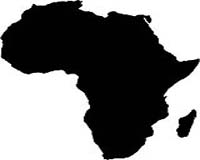
American AFRICOM Initiative Is Not Welcome In Africa
RIA Novosti commentator Moscow, Russia (RIA Novosti) Oct 09, 2007 American troops attract terrorists like magnet attracts metal. African and Asian countries have made this conclusion four and a half years after the Iraqi campaign began. U.S. Africa Command, or AFRICOM, started functioning as the Pentagon's newest regionally focused headquarters in Stuttgart, Germany, because Liberia was the only country to offer its territory for AFRICOM's headquarters. President George W. Bush set the goal of establishing the command last February. AFRICOM is projected to become a fully operational unified command by October 2008, and expects its headquarters in Germany, opened on October 1, 2007, to be temporary. The new command has extensive, even if a bit vague, tasks, such as promoting stability and civic development, improving living standards and preventing the spread of terrorism, training African servicemen and supplying weapons, and bringing medical aid to Africa. It all sounds good and noble, but why then have the majority of African states, which hardly ever refuse humanitarian, economic and military aid, said "no" to the Americans? Washington was taken aback. The explanation is simple: African nations fear that AFRICOM and its headquarters will attract the attention of terrorists and other enemies of the United States. Magazine Jeune Afrique wrote in September that locating AFRICOM's headquarters in Africa would create a situation similar to that in the Middle East, to which the United States brought fire and bloodshed, allegedly in a desire to spread democracy. Instead of protecting the continent from terrorism, AFRICOM will attract terrorists to Africa like a magnet attracts metal, the same as the invasion of Iraq by the Anglo-American armies attracted terrorists to Mesopotamia, the magazine writes. There are solid reasons behind that comparison with the Middle East. The proclaimed goals of the new U.S. regional command sound very much like Washington's plans to spread democracy to the Broader Middle East. The relevant examples of that policy are Afghanistan, Iraq and Lebanon, where human suffering has not abated. In the past, Arab countries worked jointly with European and Russian diplomats to formalize the spread of democracy in the Partnership for Progress and a Common Future with the governments and peoples of the Broader Middle East and North Africa, approved by the G8 leaders in 2004. It clearly stipulated the kinds of aid and the timeframes, with assistance to be provided only by agreement with the leaders of the given country and with due respect for its national specifics. In short, partnership is the key word here. Nobody knows how AFRICOM would work. Given the United States' grim experience in Somalia in the early 1990s and the more recent inability of the West to stabilize the situation there or solve Sudan's Darfur problem, we can assume that the American view of African problems will differ from that of the locals. Although the proclaimed goal of AFRICOM is to find common language with African nations, nobody can guarantee that it will do better there than it did in Iraq or Afghanistan. I am referring not only to stabilization and the spread of democracy - after all, opinions of these goals can differ - but also, and mainly, to trying to understand the locals and their requirements, to become accepted in a foreign land. African leaders know that this will not happen. They are ready to sign partnership agreements with the United States and to cooperate with it in many spheres, from trade to security. But they are not ready to allow it into Africa, especially because they know that Washington's intentions are not as lily-white as it claims. In fact, what the United States wants in Africa is oil, which will soon account for 25% of American oil imports. It needs to protect and guarantee future deliveries, because competition is growing in Africa at breakneck speed. Apart from traditional rivals - France and Britain - it may have to compete with Russia, which is trying to return to Africa. But America's biggest enemy there is China, which has won quite a few African contracts in many economic sectors. Nobody can rival the rising Asian Tiger, especially because it does not wrap cooperation in fine words about democracy and human rights. This suits African leaders, who fear that AFRICOM may tie their hands. Even if this is not so and Washington's intentions in Africa are perfectly noble, the African leaders are not convinced. The reason is the tarnished reputation of the American diplomacy and army. Washington will have to work very hard to change it in Asia and Africa. The opinions expressed in this article are the author's and do not necessarily represent those of RIA Novosti.
Source: RIA Novosti Community Email This Article Comment On This Article Related Links The Military Industrial Complex at SpaceWar.com Learn about the Superpowers of the 21st Century at SpaceWar.com
 Army needs three to four years to recover from Iraq strains: chief
 Washington (AFP) Oct 8, 2007
The US Army will need three or four years to recover from the strains of repeated deployments to Iraq even with a planned drawdown of US forces next year, the service's chief said Monday. |
|
|

| The content herein, unless otherwise known to be public domain, are Copyright 1995-2007 - SpaceDaily.AFP and UPI Wire Stories are copyright Agence France-Presse and United Press International. ESA Portal Reports are copyright European Space Agency. All NASA sourced material is public domain. Additional copyrights may apply in whole or part to other bona fide parties. Advertising does not imply endorsement,agreement or approval of any opinions, statements or information provided by SpaceDaily on any Web page published or hosted by SpaceDaily. Privacy Statement |