
 |
 |
 |
 |
 |
 |
 |
 |
 |
 |

| . |  |
. |
Ames Hopes To Get A Chance To Help Dig Up Moon
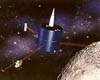
Moffett Field CA (SPX) Nov 21, 2005 NASA has announced that it is assigning management of its Robotic Lunar Exploration Program to NASA Ames Research Center in California's Silicon Valley. Returning astronauts to the moon will start with robotic missions between 2008 and 2011 to study, map and learn about the lunar surface. These early missions will help determine lunar landing sites and whether resources, such as oxygen, hydrogen and metals, are available for use in NASA's long-term lunar exploration objectives. The assignment marks a rebirth of robotic space flight work at NASA Ames, which has a history of spearheading unmanned space launches. "The Robotic Lunar Exploration Program is a critical element of NASA's Vision for Space Exploration," said Exploration Systems Mission Directorate Associate Administrator Dr. Scott Horowitz. "Data collected will help determine where we go, and what we find during our first human missions to the lunar surface." "Ames is delighted to be the home of the new Robotic Lunar Exploration Program," said G. Scott Hubbard, Ames' director. "Our center has a 40-year history of excellent space flight programs and project management: the Pioneer 6-13 series, the Galileo Probe and Lunar Prospector, as well as a lunar magnetic field instrument for four Apollo missions starting with Apollo 12 in 1969. We will apply all this experience to make RLEP successful," Hubbard noted. Launched on Jan. 6, 1998, from Cape Canaveral Air Station, Fla., Lunar Prospector reached the moon in four days. The mission was the last NASA voyage to our nearest neighbor in space. The spacecraft orbited the moon and gathered data that resulted in evidence that water ice exists in shadowed craters near the lunar south and north poles, the first precise gravity map of the entire lunar surface, confirmation of the presence of local magnetic fields that create the two smallest magnetospheres in the solar system and the first global maps of the moon's elemental composition. Returning robots, and then astronauts, to the moon provides opportunities to develop and mature technologies needed for long-term survival on other worlds, according to scientists. "An exploration science program with a sustained human presence on the moon gives us the opportunity to conduct fundamental science in lunar geology, history of the solar system, physics and the biological response to partial (Earth) gravity," said Christopher McKay, lunar exploration program scientist at Ames. "Establishing research stations on the moon will give us the experience and capabilities to extend to Mars and beyond," robotics deputy program manager Butler Hine of Ames noted. Related Links SpaceDaily Search SpaceDaily Subscribe To SpaceDaily Express  NASA Ames Leads Robotic Lunar Exploration Program
 Moffett Field CA (SPX) Nov 16, 2005
On Monday, the 36th anniversary of Apollo 12, the second manned lunar landing, NASA announced that it has assigned management of its Robotic Lunar Exploration Program to NASA Ames Research Center in California's Silicon Valley. |
|
|

| The content herein, unless otherwise known to be public domain, are Copyright 1995-2006 - SpaceDaily.AFP and UPI Wire Stories are copyright Agence France-Presse and United Press International. ESA PortalReports are copyright European Space Agency. All NASA sourced material is public domain. Additionalcopyrights may apply in whole or part to other bona fide parties. Advertising does not imply endorsement,agreement or approval of any opinions, statements or information provided by SpaceDaily on any Web page published or hosted by SpaceDaily. Privacy Statement |
