
 |
 |
 |
 |
 |
 |
 |
 |
 |
 |

| . |  |
. |
An American Spy Plane And A Russian Telecom Aircraft
Moscow (RIA Novosti) Nov 06, 2007 It is not surprising that military developments in one country make its opponents take similar steps. Many examples of this exist, but instances of the West's civilian industry placing orders in the Russian defense sector and helping it back to its feet are hard to remember. Yet this is what is currently taking place: Russian aircraft builders are negotiating with an unnamed Western firm about the possible resumption of manufacturing the Myasishchev-55 high-altitude plane. This aircraft was designed in the U.S.S.R. during the late 1960s as a reply to the American Lockheed U-2 high-altitude reconnaissance plane. The current mission of Russia's M-55 will be entirely peaceful - relaying telecommunications signals. But the fact remains: Western firms could help renew the production of Russian high-altitude reconnaissance planes. Ever since the late 1950s, American U-2 aircraft exasperated Russian leaders by making reconnaissance flights deep into U.S.S.R. territory at an altitude beyond the reach of interceptor planes. Developed by Lockheed, the Lockheed U-2/TR-1 aircraft was nicknamed the Black Lady of Espionage in the United States for fulfilling mainly CIA assignments. In May 1960, its flights over the U.S.S.R. came to an end when an American aircraft piloted by Francis Gary Powers approached the Ural Mountains and a new Russian anti-aircraft missile made a direct hit. But the urgency of developing the M-55 did not go away. Aside from direct reconnaissance duties these planes were given the task of fighting high-altitude balloons that drifted over Soviet territory and conducted aerial photography and filming. The need to install weapons aboard the aircraft made the designers seek an acceptable weight-to-payload ratio. The final product was a light-weight and rugged two-fuselage design, which, incidentally, is not typical of serially-produced planes. Balloon operations soon petered out, however, dispensing with the need to arm the M-55. That increased its carrying capacity and added to its payload, but the plane never reached a serial production stage. To cater to the needs of the Defense Ministry, the Smolensk aircraft plant manufactured four prototypes, two of which were lost in accidents. One of the remaining planes was converted to a flying environmental monitoring laboratory that came to be known as the M-55 Geophizika, a peaceful-sounding name. The Western plans to transform a reconnaissance plane into a telecom aircraft are logical; in some cases using aircraft for civilian communications purposes proves more advantageous than satellite relaying. Incidentally, the military widely employs airborne relay facilities. In Russia, these are the An-12 RT and An-26-RT aircraft and Mi-9 helicopters. Sometimes aviation is the only possible option. In the world there are quite a few spots where satellite channels are inadvisable or impossible. For example, in areas hit by natural disasters, when the ground communication infrastructure is destroyed and the delivery of mobile stations is rendered difficult. In such cases, the optimum solution is a special aircraft. It is also desirable that for economic reasons it should be as high-flying as possible. At an altitude of 20 km such an aircraft can send signals over an area one order of magnitude wider than the one served by five planes flying at an altitude of 5 km. An additional requirement is a large payload because communication equipment weighs a lot. It appears the M-55 is simply a must for sustained communication in non-standard situations. Here is a brief summary of its specifications. The plane is equipped with two unsupercharged engines with a nominal thrust of 4,500 kg each; it is 650 kg at a ceiling of 21.5 km. It has a cruise speed of 740 km/h and a maximum range of 5,000 km at an altitude of 17,000 m. In their day the Americans built 35 U-2/TR-1 planes. No other aircraft matches the M-55 in the world today, but there have been a number of reports recently that the Black Lady is resuming serial production. The opinions expressed in this article are the author's and do not necessarily represent those of RIA Novosti.
Source: RIA Novosti Community Email This Article Comment On This Article Related Links The latest in Military Technology for the 21st century at SpaceWar.com
 Lockheed Martin's Guided MLRS Unitary Rockets Successful In Anti-Jamming Tests
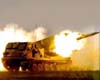 Dallas TX (SPX) Nov 06, 2007
Lockheed Martin successfully conducted two Guided Multiple Launch Rocket System (GMLRS) Unitary rocket Phase II Product Qualification Test flights recently at White Sands Missile Range, NM. These "GPS2 jamming" tests demonstrated both GMLRS rocket performance while in a GPS jamming environment at long range, as well as the functionality of the warhead using the Point Detonating fuze within the jamming environment. All tests objectives were achieved. |
|
|

| The content herein, unless otherwise known to be public domain, are Copyright 1995-2007 - SpaceDaily.AFP and UPI Wire Stories are copyright Agence France-Presse and United Press International. ESA Portal Reports are copyright European Space Agency. All NASA sourced material is public domain. Additional copyrights may apply in whole or part to other bona fide parties. Advertising does not imply endorsement,agreement or approval of any opinions, statements or information provided by SpaceDaily on any Web page published or hosted by SpaceDaily. Privacy Statement |

