
 |
 |
 |
 |
 |
 |
 |
 |
 |
 |

| . |  |
. |
Analysis: Algeria bombs show al-Q strength
Washington (UPI) Aug 22, 2008 Although no one has claimed responsibility for the series of deadly bombings this week in Algeria, suspicion immediately focused on the Islamic extremist group that now calls itself al-Qaida in the Islamic Maghreb. Experts say the car bomb attacks, against a police academy Tuesday morning and an army barracks and a bus full of local workers for a Canadian engineering firm Wednesday, bore all the hallmarks of AQIM. More than 50 people died in the attacks, the latest in a series of bombings since the group relaunched itself as the local franchise of al-Qaida in 2006. The group has its origins in the campaign of violence that almost tore the country apart in the early 1990s when the military pre-empted elections that an Islamist coalition was poised to win. Today, with the setbacks it has suffered in Iraq, North Africa is second only to Afghanistan and the mountainous tribal border regions of Pakistan as the focus of al-Qaida's murderous campaign. "This is an extension of the insurgency -- a civil war almost at times -- that has been raging since the 1990s and never really stopped," Steven Cook of the Council on Foreign Relations told United Press International of the recent bombings. Beginning in 1992, the violence, led by fighters returning from the successful insurgency against the Soviets in Afghanistan and organized in the Armed Islamic Group, claimed more than 150,000 lives. The violence spread to Europe in 1994, when gunmen hijacked an Air France jet bound for Paris. In an eerie premonition of the Sept. 11, 2001, plot, the hijackers intended to crash the plane into Paris, say French security officials, but were killed when they stopped in Marseille. The following year, bombings on the Paris metro killed eight people and injured dozens. The group drew condemnation even from fellow extremists for its grisly mass killings of civilians, and in 1998 Hassan Hattab and others broke away, charging that its tactics -- which it blamed in part on infiltration by the Algerian military -- were alienating potential supporters. Hattab formed the Group for Salafist Preaching and Combat, which renewed a guerrilla war against the government. Jihadists in Algeria have a longstanding relationship with al-Qaida leader Osama bin Laden, who reportedly contemplated moving his base there as an alternative to Afghanistan when he had to leave Sudan in the 1990s. After the Sept. 11, 2001, terror attacks, the GSPC was added to the U.S. list of worldwide terror groups. But despite its leaders' relationship with bin Laden and the designation by the U.S. government, the GSPC appears to have remained focused on its internal battle with the Algerian state, at least until 2006. In March 2003 GSPC leader Amari Saifi, known as el Para because of his stint in the airborne military, kidnapped more than 30 European tourists, netting the group an estimated $10 million in ransom payments. The following year, after a long, multinational hunt led by the U.S. military, el Para was captured in Chad and eventually turned over to the Algerians. To get help in freeing him, GSPC leader Abdelmalek Droukdal told The New York Times last month, in his first ever statement to the Western media, the group reached out in 2004 to Abu Musab al-Zarqawi, the leader of al-Qaida in Iraq. A series of secret messages between the GSPC and al-Qaida leaders in Iraq and on the Afghan-Pakistani border resulted in the Algerian group eventually merging with al-Qaida. The move was announced by al-Qaida's No. 2, Ayman al-Zawahiri, in September 2006, and in early 2007 the GSPC formally changed its name to AQIM. But the growing closeness to al-Qaida was not to everyone's taste. Hassan Hattab, who had left the group he founded in 2003, called as early as March 2005 for his former colleagues to lay down their weapons. In 2007 he renewed that call after a bomb attack killed 33 people and injured more than 200 in the capital, Algiers, accusing the AQIM leadership of trying to turn Algeria into "a second Iraq." In September 2007 he surrendered to the authorities, apparently seeking to take advantage of an amnesty the Algerian government was promulgating for jihadists -- the second such since the ascension of President Abdelaziz Bouteflika in 1999. This week, following the latest bombings, Hattab renewed his call a third time. "I advise you to have the courage to lay down your weapons," he told former comrades in a letter to an Algerian newspaper, calling the violent struggle "a blind alley." According to the U.S. State Department, since the merger AQIM "is still primarily focused on the Algerian government" but "now considers foreign interests to be attractive targets" and has adopted suicide bombings and other al-Qaida tactics. "We have witnessed a shift in Algeria to tactics that have been successfully employed by insurgents and terrorists in Iraq and Afghanistan," the department said in its annual review of global terrorism, including "the use of suicide car bombs, suicide vests and improvised explosive devices." In 2007 AQIM carried out eight suicide attacks that resulted in dozens of government and civilian casualties. But some analysts caution against reading too much into the merger and the group's name change. "There has been no substantial change, either in tactics or in targets," since the merger, the Council on Foreign Relations' Cook told UPI. Community Email This Article Comment On This Article Share This Article With Planet Earth
Related Links The Long War - Doctrine and Application
 Monitiring Security At US Federally Managed Dams
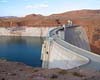 Washington DC (SPX) Aug 22, 2008
Since the terrorist attacks of 2001, the Bureau of Reclamation (BOR), which operates and manages dams that provide water and power to millions of people, has invested significant resources in security and is better able to protect its facilities and personnel, says a new report from the National Research Council. |
|
|

| The content herein, unless otherwise known to be public domain, are Copyright 1995-2007 - SpaceDaily.AFP and UPI Wire Stories are copyright Agence France-Presse and United Press International. ESA Portal Reports are copyright European Space Agency. All NASA sourced material is public domain. Additional copyrights may apply in whole or part to other bona fide parties. Advertising does not imply endorsement,agreement or approval of any opinions, statements or information provided by SpaceDaily on any Web page published or hosted by SpaceDaily. Privacy Statement |
 del.icio.us
 Digg
Digg Reddit
 YahooMyWeb
 Google
 Facebook