
 |
 |
 |
 |
 |
 |
 |
 |
 |
 |

| . |  |
. |
Analysis: Cameroon oil violence on rise
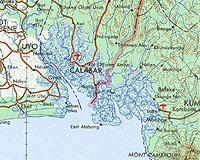
Yaounde, Cameroon (UPI) Nov 16, 2008 Ten oil workers kidnapped last month off the coast of Cameroon were freed after weeks of being held captive by militant groups waging attacks off the coast of the Bakassi Peninsula, a highly coveted oil-producing region that earlier this year was handed over to Cameroon from neighboring Nigeria after decades of dispute. The seven Frenchmen, a Tunisian and two Cameroonian workers were released unharmed, though militants had threatened to kill them if Cameroon did not renegotiate the status of Bakassi. Militant leader Ebi Dari, who has been connected to both the Niger Delta Defense and Security Council and the Bakassi Freedom Fighters, has demanded that the region be given greater autonomy from Cameroon. Some militants have even suggested the region gain its independence from the West African nation. Militant groups based in neighboring Nigeria and roaming the Gulf of Guinea off both the Nigerian and Cameroonian coasts have waged several attacks in recent months. Ahead of the August 2008 handover of the Bakassi Peninsula, a battle between Cameroonian militants and military left 10 gunmen and two soldiers dead. Some 50 people have been killed in recent violence associated with militant ire over the Bakassi Peninsula issue. The decision in August by Nigerian President Umaru Yar'Adua to hand over such a potentially lucrative piece of land has some praising the Nigerian leader for his diplomatic decision-making, while others lamented the loss of a potentially fertile oil-drilling territory. "The handover event will be a very controversial move in Nigeria," noted Mark Schroeder, a sub-Saharan Africa analyst for Stratfor Strategic Forecasting Inc., shortly after Bakassi was returned to Cameroon. Following the turnover, Dari demanded that Yar'Adua and Cameroonian President Paul Biya "come together to renegotiate the Bakassi problem." While officials in both Cameroon and Nigeria denounce the militants as armed tyrants, Dari and other self-styled commanders of well-equipped groups of gunmen claim their cause has a political agenda aimed at creating accountability for the revenue generated by both nations' petroleum industries. Military officials from Cameroon, meanwhile, are seeking financial compensation for their role in the handover of Bakassi. Members of the military argue that they helped orchestrate the delivery of what amounts to a multibillion-dollar parcel of land and deserve to be rewarded for their efforts. Some of Cameroon's military officials contended that the deal surely would have fallen through were it not for their calm while being provoked by armed militants in the region, most notably those from the Niger Delta, infamous for their attacks on petroleum installations and oil-worker kidnappings. The territory has been a point of contention between Nigeria and Cameroon for more than a century, dating back to the colonial period. Cameroon currently administers the territory to the north, while Nigeria controls the southern half. The two countries appeared to be on the verge of war over the territory in 1981. Several armed clashes in the 1990s prompted Cameroon to first take the dispute to the International Court of Justice in 1994. Relatively underdeveloped and considered one of the world's most fertile fishing grounds, the Bakassi Peninsula is believed to hold oil riches similar to those of the Niger Delta, which produces an estimated 2 million barrels per day. Militants led by Dari say they are also fighting for compensation for those fishermen forced to leave the territory to make way for future oil development. Those prospective riches have prompted numerous foreign oil companies to inquire into securing the rights to explore the peninsula, though the territory remains relatively undeveloped. Share This Article With Planet Earth
Related Links Powering The World in the 21st Century at Energy-Daily.com
 Analysis: Russia's energy economic woes
 Washington (UPI) Nov 14, 2008
 Several months ago Russia's finances seemed unassailable -- record-high oil prices had brought an unprecedented amount of petrodollars to Moscow, and the state-owned Gazprom natural gas monopoly seemed well on its way to becoming a company with $1 trillion in capital. |
|
|

| The content herein, unless otherwise known to be public domain, are Copyright 1995-2007 - SpaceDaily.AFP and UPI Wire Stories are copyright Agence France-Presse and United Press International. ESA Portal Reports are copyright European Space Agency. All NASA sourced material is public domain. Additional copyrights may apply in whole or part to other bona fide parties. Advertising does not imply endorsement,agreement or approval of any opinions, statements or information provided by SpaceDaily on any Web page published or hosted by SpaceDaily. Privacy Statement |
 del.icio.us
 Digg
Digg Reddit
 YahooMyWeb
 Google
 Facebook