
 |
 |
 |
 |
 |
 |
 |
 |
 |
 |

| . |  |
. |
Analysis: Kyrgyzstan's energy crisis
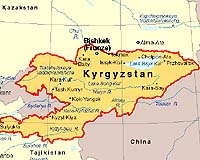
Washington (UPI) Nov 21, 2008 When the Soviet Union collapsed in 1991, Western energy companies saw an opportunity to exploit one of the world's last important hydrocarbon frontiers -- the Caspian. Among the new nations ringing its shore were Turkmenistan and Kazakhstan; while the former devolved into a hermitic nation ruled by a "cult of personality," Kazakhstan eagerly embraced Western capitalism and last year produced more than 1.4 million barrels of oil per day. Geographical isolation lessened Western opportunities in the "Stans" farther east -- Uzbekistan, Tajikistan and Kyrgyzstan. But if Kyrgyzstan lacked hydrocarbon assets, it quickly won plaudits for its democratic inclinations. But Western applause has faded, and now the country is on the brink of an energy shortage that threatens this winter to plunge the entire country into frozen darkness. The CIA states, "Kyrgyzstan is a poor, mountainous country with a predominantly agricultural economy." The capitalist gravy train has left many Kyrgyz behind -- according to Minister of Labor and Social Development Uktomhan Abdullayev, 35 percent of the population now lives below the poverty line. The United Nations Office for the Coordination of Humanitarian Affairs recently expressed concern about an estimated 700,000 Kyrgyz out of a population of 5.3 million, many of whom now lack decent shelter and facilities as winter approaches. OCHA's estimate includes 580,000 people it identifies as "food insecure" and 250,000 people at risk because of electricity and water shortages. OCHA and related U.N. agencies and their non-governmental organization partners are seeking $18 million in donations to assist Kyrgyz government efforts to develop a winter response plan to ensure minimum standards of basic services. The current debacle is a perfect storm of disrupted trading patterns, inept government regulation, corruption and aging equipment. In 1990, the last full year of Soviet power, 98 percent of Kyrgyz exports went to other parts of the Soviet Union. Following the collapse of communism, in 1991-1994 the Kyrgyz government's promotion of electricity brought an increase of 117 percent in household use. The epicenter of the Kyrgyz energy crisis is the fact that Kyrgyzstan's 15 hydroelectric stations generate 92.5 percent of domestically consumed electricity, and the country currently has only three operating commercial thermoelectric plants. Antiquated Soviet-era equipment and graft mean that an estimated 45 percent of the country's electricity is either illegally diverted or leaks from the transmission system. The implosion of the Soviet Union brought about dramatic change in the regional trading patterns between the newly independent "Stans." Kyrgyzstan's growing reliance on hydroelectric power and its position at the headwaters of the Syr Darya, one of the two largest rivers in Central Asia, exacerbated its relationship with downstream Uzbekistan, Kazakhstan and Turkmenistan, who were dependent on regular spring and summer water discharges for their agriculture. Over the last few years, Kyrgyzstan and Tajikistan have increasingly hoarded water in their alpine reservoirs to generate electricity in the winter, flooding their downstream neighbors. Both countries have attempted to get their more prosperous western neighbors to agree either to pay for water or to return energy imports, but no definitive agreement has yet been reached. On Oct. 18 the deputy prime ministers of Uzbekistan, Kazakhstan, Turkmenistan, Tajikistan and Kyrgyzstan met and signed an agreement on the use of water-power resources during the coming winter and in 2009, but it remains to be seen how the agreement will work in practice. Kyrgyzstan's largest hydroelectric station is the Kurp-Say facility, which is fed by the Toktogul Reservoir and is situated in Jalal-Abad province on the Naryn River, the Syr Darya's primary tributary. Other major hydroelectric facilities are located at Atabashin, Alamedin and Uchkorgon, but it is Toktogul that is causing the most concern. Five other hydroelectric plants are on the Naryn. According to Minister of Energy and Fuel Resources Saparbek Balkibekov, Toktogul usually provides about 40 percent of the national electricity needs, but, in another example of the government's penchant for secrecy, other sources estimate that Toktogul provides up to 90 percent of the country's electricity. Toktogul, currently containing about 9.5 billion cubic meters of water, is at a historic low, as the volume is less than half the water the reservoir usually holds. Kyrgyz analysts predict that if Kyrgyzstan operated Toktogul at its normal capacity, its water reserves would run so low that the facility would shut down sometime around New Year. In consequence, in mid-August the government instituted eight-hour-long rotating energy cuts in the northern part of Kyrgyzstan, including Bishkek. Toktogul electricity powers Bishkek's Thermal Energy Center, an aging Soviet energy complex that Balkibekov unsuccessfully tried to interest foreign investors in purchasing for $350 million. Electricity rationing is currently being employed throughout the entire country with outages in some areas lasting up to 11 hours every day. The political finger-pointing has already begun, with Kyrgyz President Kurmanbek Bakiyev on Nov. 21 criticizing his Economic Minister Akylbek Japarov and Balkibekov for sounding overly alarmist and issuing "irresponsible statements." Bakiyev had cause to be alarmed, but it was primarily over his political future; responding to the energy crisis, on Nov. 18 political opposition leaders Azimbek Beknazarov, Topchubek Turgunaliyev, Nurlan Motuyev, Anvar Artykov, and former Ombudsman Tursunbai Bakir uulu held a People's Assembly demonstration protest in Talas in northern Kyrgyzstan attended by over a thousand people, in response to the previous day's announcement by Severelektro Director General Talant Raimjanov that the authorities intend to introduce nightly power blackouts in the capital, Bishkek. Even if the Kyrgyz government somehow manages to cope during the next few months, the long-term prognosis is grim. Sapar Orozbako, director of the Biskek Center for Economic Analysis, is pessimistic, commenting, "The shortage of electricity will continue for the next two to three years, even if the Toktogul hydroelectric and other reservoirs are replenished." Ironically, energy experts estimate that only about 10 percent of Kyrgyzstan's hydroelectric power potential is currently being exploited and that additional facilities on the Naryn alone could generate an additional 2,200 megawatts. All of this is cold comfort to Kyrgyz citizens; if Bakiyev's government wishes to avoid another "tulip" revolution, then it had better come up quickly with a solution to the country's power problems. If they don't, then the color of Bishkek's next insurrection will be as black as the capital after dark. Share This Article With Planet Earth
Related Links Powering The World in the 21st Century at Energy-Daily.com
 Commentary: Nostradamus Redux
 Singapore (UPI) Nov 21, 2008
 Although political forecasting and economic prognostication have long made astrology look respectable, there is still a latter-day Nostradamus who has defied the odds. "If Nostradamus were alive today," said the New York Post, "he'd have a hard time keeping up with Gerald Celente" -- the man who tracks the world's social, economic and business trends for corporate clients. |
|
|

| The content herein, unless otherwise known to be public domain, are Copyright 1995-2007 - SpaceDaily.AFP and UPI Wire Stories are copyright Agence France-Presse and United Press International. ESA Portal Reports are copyright European Space Agency. All NASA sourced material is public domain. Additional copyrights may apply in whole or part to other bona fide parties. Advertising does not imply endorsement,agreement or approval of any opinions, statements or information provided by SpaceDaily on any Web page published or hosted by SpaceDaily. Privacy Statement |
 del.icio.us
 Digg
Digg Reddit
 YahooMyWeb
 Google
 Facebook