
 |
 |
 |
 |
 |
 |
 |
 |
 |
 |

| . |  |
. |
Analysis: Nigeria oil strike called off
Washington DC (UPI) Mar 26, 2009 Nigerian oil workers have called off a proposed strike following two days of talks between the government and union leaders, with both sides agreeing to create a joint panel to discuss the workers' complaints about violence in the petroleum-rich Niger Delta. Officials from Nigeria's two leading oil workers' unions -- the Petroleum and Natural Gas Senior Staff Association of Nigeria, known as Pengassan, and the National Union of Petroleum and Natural Gas Workers -- and federal negotiators said they would spend the next three months working on ways to address the security situation in the delta and discuss union concerns about a proposal to remove the government subsidy on petroleum products, part of a wide-ranging reform proposal by Nigerian oil officials for the sector. One of the most controversial changes would allow the state-run Nigerian National Petroleum Corp. to solicit private funds for investments in joint ventures with foreign energy firms, ending the longstanding policy that required the NNPC to ask the federal government directly for capital. In all, four separate committees representing the government, labor, security and petroleum officials, as well as the unions, will work until July 1 to hammer out a deal that would keep oil workers on the job. "It was unanimously agreed that the four committees shall commence work immediately with a three-month time frame for the stakeholders' plenary session to reconvene and review the progress made on the agreed terms of reference," read a joint statement by the Nigerian government and oil-union officials. The threat of a long-term walkout by Nigerian oil workers has been looming for weeks. Earlier this month the unions gave the Nigerian government 21 days to meet their demands. The deadline -- March 23 -- came and went while union leaders and federal officials engaged in marathon talks that ended Tuesday. Still without an agreement, union officials stressed the importance of protecting their workers from the violence perpetrated by armed militants in the delta, who for the last several years have kidnapped and killed hundreds of workers. Groups like the Movement for the Emancipation of the Niger Delta say their struggle is about achieving a fairer distribution of the country's oil wealth, though detractors condemn the militants and others for their alleged thuggery. Since the end of 2005, Nigeria's petroleum-rich Niger Delta has been under siege by MEND and other armed groups calling for a more equitable distribution of the country's oil wealth. During several decades of production, Nigerian oil and gas has generated hundreds of billions of dollars for foreign oil interests and untold wealth for delta politicians, some of whom have come under investigation since President Umaru Yar'Adua came to power in 2006. Meanwhile, the vast majority of delta residents live in abject poverty. Nearly three-quarters of them live on less than a dollar a day. With little in the way of infrastructure or social programs to show for those windfall profits, militant groups have declared war on the oil industry, attacking oil and gas installations both onshore and offshore, hampering production significantly. Their tactics include kidnapping oil workers for ransom and tapping into pipelines and selling oil on the international black market, a practice known locally as bunkering. Before the MEND campaign began, Nigeria's production reached 2.5 million barrels per day at the beginning of 2006. Now, according to recent statistics presented by President Yar'Adua earlier this month, output has fallen to 1.6 million barrels, dropping Nigeria from the top spot among African oil producers, putting it behind upstart Angola. A long-term strike would even further hamper production, though some experts said it seems unlikely. Union workers could ill afford a prolonged work stoppage, said Mark Schroeder, a sub-Saharan Africa analyst for Stratfor, nor would the workers want to draw attention to the little impact their absence would have on an industry already suffering from a diminished capacity. "Even if they do go on strike, they would typically go on strike two or three days at most," Schroeder told United Press International. Share This Article With Planet Earth
Related Links Powering The World in the 21st Century at Energy-Daily.com
 PetroChina profit falls 22 percent in 2008
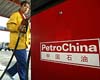 Beijing (AFP) March 25, 2009
PetroChina, the listed unit of China's largest oil and gas producer, said Wednesday its net profit in 2008 fell 22 percent as the global downturn hit business and crude prices plunged. |
|
|

| The content herein, unless otherwise known to be public domain, are Copyright 1995-2007 - SpaceDaily.AFP and UPI Wire Stories are copyright Agence France-Presse and United Press International. ESA Portal Reports are copyright European Space Agency. All NASA sourced material is public domain. Additional copyrights may apply in whole or part to other bona fide parties. Advertising does not imply endorsement,agreement or approval of any opinions, statements or information provided by SpaceDaily on any Web page published or hosted by SpaceDaily. Privacy Statement |
 del.icio.us
 Digg
Digg Reddit
 YahooMyWeb
 Google
 Facebook