
 |
 |
 |
 |
 |
 |
 |
 |
 |
 |

| . |  |
. |
Analysis: State responds to Iraqi oil fund
Washington DC (UPI) Sep 22, 2008 An Iraqi oil trust fund proposed by Sens. Hillary Clinton and John Ensign may derail Iraqi government negotiations on already divisive oil and revenue-sharing laws, a State Department official said. Legislation recently introduced by Clinton, D-N.Y., and Ensign, R-Nev., requires the U.S. State Department to present to the Iraqi government an "oil trust plan" or lose a portion of Iraq reconstruction and economic funding. The "plan," according to the legislation, "includes background on oil trusts, including those currently used by sovereign nations or territories and states within nations; and options for different types of oil trusts that could be implemented in Iraq; and includes a discussion on the steps necessary to implement an oil trust." A package of four oil-related laws is being debated within the Iraqi legislative process. This includes the hydrocarbons framework law and a revenue-sharing law. The Clinton-Ensign bill "could have a negative impact on reaching a political compromise on pending oil-related legislation, including the Revenue Sharing Law," a State Department official, speaking on background, told United Press International, "by interfering with the ongoing negotiations on the package of four laws." The hydrocarbons law -- commonly referred to as the oil law -- would determine how much control the central, regional and provincial governments should have over the oil sector, how to rebuild the domestic oil sector, and to what extent private and foreign oil companies should be allowed into Iraq. A Clinton aide told UPI "a strong plan presented by the U.S. government would offer a solution to the oil revenue political problems that they have." Meanwhile, Iraq is simultaneously negotiating a revenue-sharing law while redistributing the funds to provincial governments and the Kurdistan Regional Government. A draft of the revenue-sharing law, published on the Web site of the KRG, defers the oil trust discussion to future legislation. "The United States government, other countries and international organizations have broached the topic of the establishment of an oil trust fund with the Iraqi government for several years," the State Department official said. The oil trust fund models of Norway, Canada, Venezuela and the state of Alaska, among others, have been presented to and discussed with Iraqi leaders. Some models wouldn't work in Iraq, and others couldn't be implemented while Iraq is a war zone and the financial institutions are still developing. "The decision to create such a fund is squarely an Iraqi one. The United States government cannot impose a durable solution," the official said. "We would hope the Iraqi government will focus resolving issues on establishing a framework on federal and regional authorities in the administration of the oil and gas sector, create an equitable revenue-sharing system with the governorates, reconstitute the Iraq National Oil Co., and restructure the federal Oil Ministry before creating an oil trust fund." Iraq has earned more than $51 billion from oil sales this year, according to a recent State Department report, mostly because of record oil prices as well as an increase in production. While Iraq's government slowly increases institutional capacity to allocate and spend its budget, the funds are collected in a U.N.-mandated bank account in New York. Inability to spend the full allocated budget and an increase in oil prices could mean Iraq's budget surplus since 2005 exceeds $60 billion, according to the U.S. Government Accountability Office. The Finance Ministry has proposed a record $79 billion budget for the next fiscal year. (e-mail: [email protected]) Community Email This Article Comment On This Article Share This Article With Planet Earth
Related Links Powering The World in the 21st Century at Energy-Daily.com
 Analysis: Iran-Turkey maritime ties
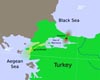 Washington (UPI) Sep 18, 2008
 A little-noticed item published Sept. 16 by Iran's Fars News Agency reported in 168 words that Iran and Turkey had signed a memorandum of understanding on maritime cooperation. What at first glance might seem a minor news item has, in fact, great potential commercial and military significance, as both countries not only share a land frontier but sit athwart maritime channels that carry significant volumes of the world's seaborne oil where the U.S. Navy is exerting an increasing presence. |
|
|

| The content herein, unless otherwise known to be public domain, are Copyright 1995-2007 - SpaceDaily.AFP and UPI Wire Stories are copyright Agence France-Presse and United Press International. ESA Portal Reports are copyright European Space Agency. All NASA sourced material is public domain. Additional copyrights may apply in whole or part to other bona fide parties. Advertising does not imply endorsement,agreement or approval of any opinions, statements or information provided by SpaceDaily on any Web page published or hosted by SpaceDaily. Privacy Statement |
 del.icio.us
 Digg
Digg Reddit
 YahooMyWeb
 Google
 Facebook