|
 |
 |
 |
 |
 |
 |
 |
 |
 |

| . |  |
. |
CU Scientists Research Space With NASA
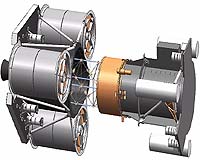
New York NY (SPX) Oct 18, 2007 With Columbia at the helm, NASA has restarted a high-profile astrophysics mission to probe the high-energy emissions of space. The initiative-known as Nuclear Spectroscopic Telescope Array, or NuSTAR-aims to study the X-ray energy emanating from black holes and supernovae. It is a joint project between the Columbia department of physics and the California Institute of Technology. Chuck Hailey, Pupin Professor of Physics, whose research group leads the project's branch at Columbia, claims the new telescope will have 1,000 times more sensitivity than those of previous high-energy missions. "We will be able to survey the galactic center-look at objects we have not even seen before-and study supernovae remnants and black hole emissions," Hailey said. After beginning the project in 2005, NASA cancelled NuSTAR in its infancy due to changing budget priorities. Now, with enthusiastic backing from Alan Stern, associate administrator of NASA's Science Mission Directorate, NuSTAR has been reinstituted with a $105 million contract. The project calls for launching X-ray detector telescopes into space by 2011. Once launched, the telescopes' detectors will relay back information designed to expand the understanding of the origins and destinies of stars and galaxies. The project is noted for its intention to study black holes, which emit high-energy X-rays. Hard X-rays are highly penetrating and thus allow scientists to peer deeply into regions obscured by gas and dust where black holes are hiding, such as the centers of galaxies both near and far. Studying exploding stars may lead to a better understanding of how elements are formed, or to the discovery of new elements. "We are highly involved in the premier high-energy astrophysics mission that will fly in space," Hailey said. "This is an exciting opportunity for undergraduates and graduates, and a time of intellectual excitement for us." Hailey said the department is currently looking for a wide array of undergraduates-particularly SEAS students and physics majors-and will soon begin recruiting graduate students, laboratory technicians, and Ph.D.s to join the project. Hailey initiated the NuSTAR project along with Fiona Harrison of the California Institute of Technology. Columbia's research will focus on the design and building of the telescope, while California Institute of Technology laboratories will tackle development of the detector. Most of the development will take place at Nevis laboratories, Columbia's primary center for high-energy experimental particle, nuclear physics, and astrophysics research. Community Email This Article Comment On This Article Related Links Columbia University Understanding Time and Space
 Electromagnetic Wormhole Possible With Invisibility Technology
 Rochester NY (SPX) Oct 14, 2007
The team of mathematicians that first created the mathematics behind the "invisibility cloak" announced by physicists last October has now shown that the same technology could be used to generate an "electromagnetic wormhole." In the study, which is to appear in the Oct. 12 issue of Physical Review Letters, Allan Greenleaf, professor of mathematics at the University of Rochester, and his coauthors lay out a variation on the theme of cloaking. Their results open the possibility of building a sort of invisible tunnel between two points in space. |
|
|

| The content herein, unless otherwise known to be public domain, are Copyright 1995-2007 - SpaceDaily.AFP and UPI Wire Stories are copyright Agence France-Presse and United Press International. ESA Portal Reports are copyright European Space Agency. All NASA sourced material is public domain. Additional copyrights may apply in whole or part to other bona fide parties. Advertising does not imply endorsement,agreement or approval of any opinions, statements or information provided by SpaceDaily on any Web page published or hosted by SpaceDaily. Privacy Statement |