|
 |
 |
 |
 |
 |
 |
 |
 |
 |

| . |  |
. |
China Helps Track French Satellite's Orbit
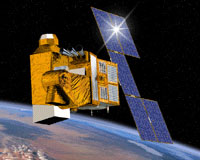
Beijing (XNA) Dec 21, 2004 Satellite observation and control networks in China and France yesterday successfully tracked the orbiting of a satellite launched by the French Government. This is the first time that China's satellite observation and control systems have provided tracking services for foreign satellites, said an official from the Xi'an Satellite Control Centre yesterday in Northwest China's Shaanxi Province, according to the Beijing-based China News Service. According to Xinhua, France launched an Ariane rocket on Saturday, lifting into orbit the new-generation of military satellites, Helios II A and six micro satellites for different scientific purposes. However, the Chinese official did not identify the concrete satellite for which the Xi'an centre provided support. Three ground observation stations at the centre carried out relays of information gathered from three circles of observation and control of the satellite, said the official, who was anonymous in the report. The use of international satellite observation and control networks is an effective method for different countries to share data as well to make up for scarce observation resources in each country, he said. In November 2001, China connected its satellite observation system for the first time to the French side's systems, the official said. One observation station of the French side later conducted observation and control support to the orbiting of the Shenzhou I and II spacecraft. Later, China and Sweden successfully realized network connection on satellite observation and control; and a long-term co-operation agreement was then signed by the two sides on dealing with emerging issues, according to the official. In April of this year, an emergency problem occurred on the "Marine No 1" satellite, and the centre in Xi'an conducting a rescue of the satellite utilized an observation station in Sweden. In May 2000, the centre selected one of its observation stations to conduct a connection test as a node of French observation system, officials said. The success of the test proved that China's space flight observation and control system could meet the requirements for observation and control for foreign satellites. Source: Xinhua News Agency Related Links SpaceDaily Search SpaceDaily Subscribe To SpaceDaily Express  China Will Launch More Spacecrafts Next Year
 Beijing (XNA) Dec 17, 2004
China will launch more spacecrafts next year, including the famous Shenzhou 6 spaceship, China's second manned spacecraft. |
|
|

| The content herein, unless otherwise known to be public domain, are Copyright 1995-2006 - SpaceDaily.AFP and UPI Wire Stories are copyright Agence France-Presse and United Press International. ESA PortalReports are copyright European Space Agency. All NASA sourced material is public domain. Additionalcopyrights may apply in whole or part to other bona fide parties. Advertising does not imply endorsement,agreement or approval of any opinions, statements or information provided by SpaceDaily on any Web page published or hosted by SpaceDaily. Privacy Statement |