|
 |
 |
 |
 |
 |
 |
 |
 |
 |

| . |  |
. |
Dam Projects Still Cause 'Excessive' Damage Worldwide: WWF
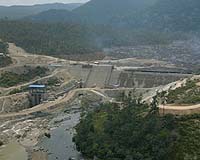
London (AFP) Nov 14, 2005 Dam projects around the world continue to cause social and environmental damage, campaigners said Monday, despite guidelines for better practice having been in place for five years. "This is not the engineering heyday of the 1950s when dams were seen as the hallmark of development," said Robert Napier, chief executive of the World Wildlife Fund (WWF) in Britain. "We know dams cause damage and we must put this knowledge to work. Governments and the World Bank must insist that the WCD (World Commission on Dams) are applied to all dam projects now," he said. More than 400 large dams are currently being built worldwide with hundreds more planned, the WWF estimated, with China, Iran and Turkey leading the construction field, closely followed by Japan. Presenting a report, "To dam or not to dam? Five years on from the World Commission on Dams", the WWF said dams needed to be economically and environmentally sustainable. Construction plans need to receive public approval while comprehensive assessments of other options should be carried out and any economic benefits should be shared with local communities, the environmental group added. The report's author Ute Collier said: "Bad dams and bad economics are apparently still alive and kicking five years after the WCD. "As the energy and water crisis tightens, we need to ensure that we choose the solutions with the least environmental damage and the greatest social benefits." WWF singles out six dam projects for criticism: the Chalillo Dam in Belize; the Ermenek Dam in Turkey; the Nam Theun 2 project in Laos; Spain's Melonares Dam; Australia's Burnett Dam and the Karahnjukar project in Iceland. Related Links SpaceDaily Search SpaceDaily Subscribe To SpaceDaily Express  Acehnese Reefs Damaged More By Humans Than Tsunami Impact
  Syiah Kuala, Indonesia (SPX) Nov 08, 2005
According to research reported this week in Current Biology, tsunami damage to coral reefs closest to the epicenter of the 2004 Sumatra-Andaman earthquake was occasionally spectacular, but surprisingly limited, particularly when compared to damage from chronic human misuse in the region. |
|
|

| The content herein, unless otherwise known to be public domain, are Copyright 1995-2006 - SpaceDaily.AFP and UPI Wire Stories are copyright Agence France-Presse and United Press International. ESA PortalReports are copyright European Space Agency. All NASA sourced material is public domain. Additionalcopyrights may apply in whole or part to other bona fide parties. Advertising does not imply endorsement,agreement or approval of any opinions, statements or information provided by SpaceDaily on any Web page published or hosted by SpaceDaily. Privacy Statement |