|
 |
 |
 |
 |
 |
 |
 |
 |
 |

| . |  |
. |
Geneva Aerospace Extends Its Flight Tech To Raspet's Ultra-Light Glider
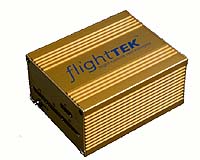
Carrollton TX (SPX) Nov 23, 2005 Geneva Aerospace has been contracted to help develop a revolutionary new class of unmanned aerial vehicle - a glider that will stay aloft for more than 24 hours. Geneva is contributing the command and control package for the glider project, which is under development at Mississippi State University's Raspet Research Flight Laboratory. The UAV project is sponsored by the U.S. Army's Space Missile Defense Command in Huntsville, AL. Flight controls for the UAV will be based on Geneva's flightTEK flight control computer, which transforms air vehicles into highly autonomous and precise unmanned machines. Originally designed for use in traditional fixed-wing UAVs, today flightTEK is being integrated into a wide range of vehicles, including both seaplanes and airships. The glider UAV used in this project is designed to be lighter and stronger than most existing models, enabling it to maintain longer flight duration while costing less for the military. The glider has a wingspan of approximately 40 feet and a weight of less than 200 pounds without payloads. The plane's flexible design will enable it to carry either infrared or electro-optical sensors, as well as acoustic sensors with a 360-degree detection range. In the future, chemical and biological weapons sensors may be installed, as well. Developers intend to initially operate the glider UAV at altitudes of sea level to 12,000 feet and migrate the UAV to higher altitudes. "A small engine will keep it aloft when needed, but most power will be provided by thermal updrafts and other atmospheric winds," said John Johnson, senior program engineer at Raspet. Ground testing is expected be completed this year, with flight tests planned for 2006. "Raspet is nationally recognized for its design and development of high-performance sailplanes and full-scale turbine-powered aircraft," said Dave Felio, president and chief executive officer for Geneva. "It's a great opportunity for Geneva to work with these leaders in aerospace research and extend our technologies to a new, highly advanced type of UAV." flightTEK features Geneva's patent-pending Variable Autonomy Control System (VACS) software, which runs on top of a variant of the real-time LINUX operating system. More than just an autopilot, VACS serves as a true mission management system. flightTEK measures just 3.5 inches by 4.75 inches by 1.75 inches, yet includes a wide variety of input/output capabilities, including seven serial ports, 12 input and 12 output digital I/O ports, eight 14-bit analog channels, a 10/100 Mbps Ethernet port and eight pulse-width-modulated (PWM) ports. This enables flightTEK to interface with the vehicle's on-board sensors, mission payload, communication system, propulsion system and all control actuators, thereby eliminating the need for a separate mission computer. In the glider UAV, flightTEK will provide the interface to all on-board systems. In addition, the flightTEK software will be modified to help keep the glider aloft using data on wind currents, thermal updrafts and general weather conditions. "Geneva had everything we needed for this project right off the shelf," Johnson said. "They are very easy to work with and understand how they can effectively modify Geneva's existing solutions for the glider." Related Links Geneva Aerospace SpaceDaily Search SpaceDaily Subscribe To SpaceDaily Express  NGC's E-10A Multi-Sensor Command-And-Control Aircraft Program Concludes Platform Design Review
 Melbourne FL (SPX) Nov 23, 2005
The U.S. Air Force and Northrop Grumman Corporation-led team's E-10A multi-sensor command-and-control aircraft program successfully completed its critical platform design review last week. |
|
|

| The content herein, unless otherwise known to be public domain, are Copyright 1995-2006 - SpaceDaily.AFP and UPI Wire Stories are copyright Agence France-Presse and United Press International. ESA PortalReports are copyright European Space Agency. All NASA sourced material is public domain. Additionalcopyrights may apply in whole or part to other bona fide parties. Advertising does not imply endorsement,agreement or approval of any opinions, statements or information provided by SpaceDaily on any Web page published or hosted by SpaceDaily. Privacy Statement |