
 |
The government could not say the situation had been completely stabilised at the plant, but after studying the possibility of severe deterioration Tokyo was comfortable with the current evacuation policy, Goshi Hosono told the paper in an interview Saturday.
"There is no way Tokyo or Kyoto will come into harm's way," said Hosono, Prime Minister Naoto Kan's special advisor on management of the nuclear crisis.
The atomic plant, where reactor cooling systems were knocked out, has been hit by a series of explosions and leaked radiation into the air, ground and sea in the world's worst nuclear disaster since Chernobyl 25 years ago.
The government last week imposed a no-go zone 20 kilometres (12 miles) around the plant, giving legal weight to an existing exclusion zone over fears of the effect of long-term exposure to radiation on residents.
More than 85,000 people have moved to shelters from areas around the plant, including from a wider 30-kilometre zone, where people were first told to stay indoors and later urged to leave.
Hosono said radiation levels in the damaged reactors had to be lowered before work would be carried out and they had to find ways to process water contaminated with radiation from efforts to cool the reactors and spent fuel rod pools.
Workers have dumped thousands of tonnes of low-level radioactive water into the Pacific Ocean, to the concern of neighbouring countries worried about contamination of the marine environment.
"Our goal is very clear: preventing further spreading of radiation into the atmosphere and into the ocean," Hosono told the paper.
"In order to achieve that, we must restore stable cooling functions. This is extremely difficult technically."
Plant operator Tokyo Electric Power Company says it does not expect a "cold shutdown" of all reactors for another six to nine months.
Hosono said officials had started to examine the causes and handling of the nuclear accident.
"When we investigate the accident, it will naturally become clear where the problems were, including issues with Japan's nuclear regulatory policy," he told the paper.
Hosono, a member of the ruling Democratic Party of Japan, said it was not the right time to decide whether the country should look to non-nuclear energy sources or continue to keep using atomic power.
"I just don't think we can make a cool-headed judgment in the current atmosphere," the paper quoted him as saying.
"For now, we should maintain both options and let the people decide in time."
DPJ secretary general Katsuya Okada on Friday said the government would review its energy policy in light of the disaster but would stick with nuclear power.
Resource-poor Japan, highly dependent on Middle Eastern oil, meets about one third of its energy needs with nuclear power, but its high-tech companies are also world leaders in many environmental and energy-saving technologies.
 del.icio.us del.icio.us |
 Digg Digg |
 Reddit Reddit |
 YahooMyWeb YahooMyWeb |
 Google Google |
 Facebook Facebook |

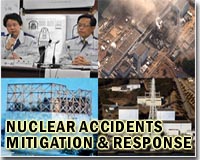 EDF wants nuclear crisis task force
| The content herein, unless otherwise known to be public domain, are Copyright 1995-2010 - SpaceDaily. AFP and UPI Wire Stories are copyright Agence France-Presse and United Press International. ESA Portal Reports are copyright European Space Agency. All NASA sourced material is public domain. Additional copyrights may apply in whole or part to other bona fide parties. Advertising does not imply endorsement,agreement or approval of any opinions, statements or information provided by SpaceDaily on any Web page published or hosted by SpaceDaily. Privacy Statement |


