|
 |
 |
 |
 |
 |
 |
 |
 |
 |

| . |  |
. |
Libya Aims To Cash In On Solar Eclipse
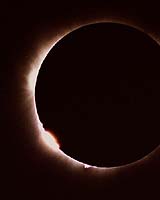
Tripoli (AFP) Mar 16, 2006 Libya is preparing to welcome thousands of Western tourists in improvised desert camps, the best place in the world to view the 29 March solar eclipse. The North African nation is to dedicate its air and sea ports to the arrival of eclipse lovers from 47 countries, including Americans, Britons and French, but excluding Israelis, tourism official Shaban al-Taeb said. Experts from Nasa are expected, with special procedures in place to allow the solar observers to get scientific equipment into the country that was for decades off-limits to most sightseeing outsiders. "Libya has the best conditions for observing the eclipse," said Ammar el-Latif, the tourism minister. The eclipse "will be visible for seven minutes around Wao Namus, 2000km (1300 miles) south of Tripoli and four minutes around Battan (on the northern Egyptian border)", he said. According to Nasa, the total eclipse will be visible as it crosses half the Earth, travelling from Brazil through northern Africa and ending up in Mongolia. A partial eclipse will be visible along a much broader path taking in much of Europe, Africa and central Asia, but the Libyan desert has what the US space agency calls "the greatest eclipse". The Wao Namus area is reserved for "savants" while tourists will be flown and bused to El-Bordi, close to the Egyptian border.
Cost of the visit Tent villages with a capacity for 7000 people, described as "luxuriously equipped", have been put up in the desert to accommodate the tourists, said Abdel Razak al-Rushed, the event organiser. The cost of the visit will be 1000 to 2000 euros per person for a maximum stay of four days, he said, including transfers to and from eclipse observation points. The ministry of tourism has warned tour operators against over-charging during the eclipse and has mobilised five state-owned companies to deal with the influx of Westerners. "Libya is not chasing financial gain from this event but wants to rise to the challenge" and launch its burgeoning tourism industry, a tourism official said.
Poor infrastructure Despite being home to ancient sites and unspoilt desert, Libya's tourist infrastructure is minimal after years of neglect, leaving the country's economy dependent on vast oil and gas reserves. But since Moamer Khadhafi renounced his pursuit of weapons of mass destruction (WMD) in 2003, Libya has slowly been welcomed back by other nations that are aware of its mineral wealth and now has a ministry of tourism. Nevertheless, years of isolation continue to be a handicap for Libyan tourism, particularly the bureaucratic obstacles that make entry, and sometimes exit, difficult. "Individual Libyan entry visas remain difficult to obtain," said Kheiri Bakir who runs a desert tourism business. However, tour operators can get group visas for no more than 50 euros per person, hopefully enough of an incentive to eclipse hesitant visitors' doubts.
Source: Agence France-Presse Related Links Solar Eclipse March 29, 2006 via NASA's Goddard Space Flight Center  Penumbral Lunar Eclipse Due Wednesday
 Greenbelt MD (SPX) Mar 12, 2006
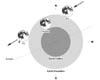
The first lunar eclipse of 2006 is a deep penumbral event best visible from Europe and Africa. First and last penumbral contacts occur at 21:22 Universal Time and 02:14 UT on Tuesday, respectively. Observers throughout most of North America will find the eclipse already in progress as the Moon rises on the evening of March 14. |
|
|

| The content herein, unless otherwise known to be public domain, are Copyright 1995-2006 - SpaceDaily.AFP and UPI Wire Stories are copyright Agence France-Presse and United Press International. ESA PortalReports are copyright European Space Agency. All NASA sourced material is public domain. Additionalcopyrights may apply in whole or part to other bona fide parties. Advertising does not imply endorsement,agreement or approval of any opinions, statements or information provided by SpaceDaily on any Web page published or hosted by SpaceDaily. Privacy Statement |