|
 |
 |
 |
 |
 |
 |
 |
 |
 |

| . |  |
. |
Lockheed Martin Ships 500th Patriot To The US Army
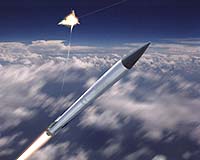
Dallas TX (SPX) Aug 17, 2007 Lockheed Martin recently recognized delivery of the 500th PAC-3 Missile to the U.S. Army during a celebration at the PAC-3 Missile production facility in Camden, AR. PAC-3 Missiles have been delivered and deployed around the world with U.S. forces and U.S. allies. The PAC-3 Missile is currently the world's only fielded pure kinetic energy air defense missile. Production of all equipment is done at Lockheed Martin manufacturing facilities in Dallas and Lufkin, TX, Chelmsford, MA, and the PAC-3 All-Up Round facility in Camden, AR. "Our highest priority is ensuring that U.S. Warfighters and our allies around the world receive a missile defense system that they can depend on," said Richard McDaniel, director of PAC-3 Programs at Lockheed Martin Missiles and Fire Control. "This important production milestone was made possible through the commitment of the PAC-3 Production team at Lockheed Martin and all of the 225 suppliers and subcontractors across approximately 25 States that remain focused on delivering this combat proven missile to our customers." "The delivery of the 500th PAC-3 Missile marks a significant milestone in the PAC-3 Program," said LTC Tony Brown, PAC-3 product manager, Lower Tier Project Office. "It signifies commitment, teamwork and success for the PAC-3 Team and Program. The PAC-3 Missile offers the Warfighters confidence and dependability. Its legacy speaks for itself." In 2006, Lockheed Martin's Camden Operations was selected as one of INDUSTRYWEEK magazine's "Top Ten Best Plants" for 2006. The Camden plant was selected from more than 200 potential candidate facilities across North America. Lockheed Martin achieved the first-ever hit-to-kill intercept in 1984 with the Homing Overlay Experiment, using force of impact alone to destroy a mock warhead outside of the Earth's atmosphere. Further testing produced today's PAC-3 Missile, which won a competition in 1993 to become the first hit-to-kill interceptor produced by the U.S. government. The PAC-3 Missile has been the technology pathfinder for today's modern missile defense systems. Currently, the Lockheed Martin-developed Aegis Weapon System, PAC-3 Missile, the Terminal High Altitude Area Defense (THAAD) Weapon System, the Medium Extended Air Defense System (MEADS) and the Multiple Kill Vehicle (MKV) are building on this proven advanced technology to deliver lethality against today's most dangerous threats. Community Email This Article Comment On This Article Related Links the missing link Learn about missile defense at SpaceWar.com All about missiles at SpaceWar.com
 MEADS Begins Preliminary Design Review
 Munich, Germany (SPX) Aug 12, 2007
The Medium Extended Air Defense System (MEADS) recently completed its Start of System Preliminary Design Review (PDR). The important two-day milestone initiated a series of 29 reviews over the next four months leading to a Summary System PDR in late October. Successful completion of the review series is necessary for the advanced air and missile defense system to begin detailed design work and to ensure progress is made for initial flight tests in 2011. |
|
|

| The content herein, unless otherwise known to be public domain, are Copyright 1995-2007 - SpaceDaily.AFP and UPI Wire Stories are copyright Agence France-Presse and United Press International. ESA Portal Reports are copyright European Space Agency. All NASA sourced material is public domain. Additional copyrights may apply in whole or part to other bona fide parties. Advertising does not imply endorsement,agreement or approval of any opinions, statements or information provided by SpaceDaily on any Web page published or hosted by SpaceDaily. Privacy Statement |