
 |
 |
 |
 |
 |
 |
 |
 |
 |
 |

| . |  |
. |
Mapping The Martian Polar Caps
Boulder - February 26, 1999 - NASA's Office of Space Science has selected a group of researchers at the University of Colorado, Boulder to spend three years mapping the polar ice on Mars using satellite data. The research team from the National Snow and Ice Data Center will create a "virtual sensor" by combining data from two instruments currently orbiting the Red Planet on NASA's Mars Global Surveyor satellite, said principal investigator and glaciologist Anne Nolin. The scientists will apply remote-sensing techniques to study the Mars data and help them to both identify the surface composition of Mars' polar ice and plot its perimeters. In addition to increasing the human understanding of Mars' climate and geophysical properties, the scientists believe the $225,000 project may help explain some of Earth's evolutionary processes, she said. "Mars is the planet most similar to Earth," Nolin said. "There used to be a lot of liquid water on Mars, but not any longer. We want to know what has caused a planet relatively similar to ours to change so much, and how and why it evolved. Ice provides a long-term archive of climate change." Although Nolin said distinctions between Mars ice and Earth ice will influence the study, both planets have large polar ice caps that play a role in their hydrological cycles, temperature gradients and atmospheric circulation. The northern ice cap on Mars is mainly fresh water, but the southern ice cap is thought to be almost entirely composed of frozen carbon dioxide. "Ice on Earth is comparatively close to the melting point, and is therefore the most dynamic type of surface cover due to seasonal changes in ice and snow extent," she says. "The lower temperatures on Mars mean that the poles experience fewer seasonal changes, but still experience changes in frost-covered areas." Ice on Mars extends to lower latitudes than ice on Earth and there is probably more frozen ground on Mars than on Earth, Nolin said. In addition to the presence of carbon dioxide ice on Mars, the substantial amount of dust in the Martian atmosphere and within the ice caps indicates that Martian ice differs greatly from Earth's polar ice and presents the greatest challenge in studying Martian ice. To address such difficulties, the researchers plan to combine images from the Mars Orbital Camera with reflectance information from the Mars Orbiter Laser Altimeter to create a multi-spectral "virtual" sensor. The camera on the Mars Global Surveyor satellite is sensitive to the visible characteristics of ice and dust, while the altimeter measures both the near-infrared reflectance of ice and its surface height characteristics. By analyzing the combined data through a series of "refining steps," the researchers will be able to measure the relative abundance of dust to ice or snow and possibly identify other surface components, Nolin said. The virtual sensor also will allow the CU-Boulder researchers to see temporary events on Mars like frost, snow and clouds. The National Snow and Ice Data Center is part of the CU-Boulder- headquartered Cooperative Institute for Research in Environmental Sciences. CIRES is a joint institute of CU and the National Oceanic and Atmospheric Administration.
Surveyor Reports At SpaceDaily Mars 98 Reports From Spacer.Com Mission Links
Mars Coverage at Spacer.Com
Future Missions
Areography
Pathfinder
 Discoverer II Radar Contractors Selected
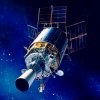 Washington - February 26, 1999 -
 The Air Force,NRO and DAPRA have selected three contractor teams for Phase One of the Discoverer II space-based radar technology demonstration program. |
|
|

|
|
|
|
|
|
|
|
|
|
|
|
| The content herein, unless otherwise known to be public domain, are Copyright 1995-2006 - SpaceDaily.AFP and UPI Wire Stories are copyright Agence France-Presse and United Press International. ESA PortalReports are copyright European Space Agency. All NASA sourced material is public domain. Additionalcopyrights may apply in whole or part to other bona fide parties. Advertising does not imply endorsement,agreement or approval of any opinions, statements or information provided by SpaceDaily on any Web page published or hosted by SpaceDaily. Privacy Statement |
