
 |
 |
 |
 |
 |
 |
 |
 |
 |
 |

| . |  |
. |
NASA Selects Teams For Space Weather Mission And Studies
Greenbelt MD (SPX) Jul 31, 2006 NASA said Monday it will award $100 million to four university teams to provide experiments and supporting hardware for a future NASA mission to study near-Earth space radiation. This type of radiation is hazardous to astronauts, orbiting satellites and aircraft flying high altitude polar routes. The teams will initially use $4.2 million to perform a one-year cost, management and technical study prior to assembling and testing their scientific payload for the mission. The anticipated lifetime cost of payload development is $96 million. Called the Radiation Belt Storm Probes, the two-spacecraft mission is scheduled for launch in 2012. The mission will study how accumulations of space radiation form and change during space storms. Space weather storms involve constantly changing magnetic and electric fields and gusts of radiation particles that produce intense energy. This energy can black out long-distance communications over entire continents and disrupt the global navigational system. "This research will provide information to aid those working in this environment to respond proactively to space radiation events, rather than reactively," said Dick Fisher, NASA's Heliophysics Division director Dick Fisher. NASA also has selected three teams to share approximately $2.3 million to conduct studies for small missions that will augment the 2012 mission. NASA will review the studies and select one investigation for continued development. Proposals for the 2012 mission and studies were submitted to NASA in response to an Announcement of Opportunity released in August 2005. Selected teams and experiments for the 2012 mission: - Boston University in Boston, Mass.: The team will measure the near-Earth space radiation particles to determine the physical processes that produce radiation enhancements and loss. - University of Iowa in Iowa City: Researchers will attempt to understand the origin of plasma waves that energize space particles to radiation levels. They also will measure the distortions to Earth's magnetic field that control the structure of the planet's radiation belts. - University of Minnesota in Minneapolis: Team members will study electric fields in space that energize radiation particles and modify the structure of the inner magnetosphere. - New Jersey Institute of Technology in Newark: Researchers will attempt to determine how space weather creates what is called the storm time ring current around Earth and determine how that ring current supplies and supports the creation of radiation populations. Selected teams for studies and areas of research to augment the 2012 mission: - University of Colorado at Boulder: Technicians are developing a potential U.S. contribution of scientific instrumentation for a Canadian scientific satellite. - University of Central Florida in Orlando: The team will measure the response of the Earth's thermosphere and ionosphere to space weather forces. - Dartmouth College, Hanover, N.H.; seek to discover the mechanisms that cause the Earth's radiation belts to periodically drain away into the planet's atmosphere. The National Reconnaissance Office in Chantilly, Va., plans to enhance the mission's scientific goals by contributing an experiment to gather additional data that will better characterize the radiation environment in space. The experiment will extend the measurement capabilities to a range beyond what was originally planned for the mission. These investigations and the Radiation Belt Storm Probe mission are part of NASA's Living with a Star Program. The program is designed to understand how and why the sun varies, how planetary systems respond and the effect on human space and Earth activities. The program is managed by NASA's Goddard Space Flight Center for the agency's Heliophysics Division of the Science Mission Directorate. Related Links NASA Living with a Star Program  New Camera Enhances Forecasting Of Sun-Generated Storms
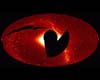 Kirtland AFB NM (AFNS) Jul 26, 2006
Every 100-plus minutes, while orbiting approximately 50 miles above the Earth onboard the Coriolis satellite, the Solar Mass Ejection Imager experiment scans the darkness of space-seeking, sun-generated magnetic clouds of particles intent on striking the planet. |
|
|

| The content herein, unless otherwise known to be public domain, are Copyright 1995-2006 - SpaceDaily.AFP and UPI Wire Stories are copyright Agence France-Presse and United Press International. ESA PortalReports are copyright European Space Agency. All NASA sourced material is public domain. Additionalcopyrights may apply in whole or part to other bona fide parties. Advertising does not imply endorsement,agreement or approval of any opinions, statements or information provided by SpaceDaily on any Web page published or hosted by SpaceDaily. Privacy Statement |
