|
 |
 |
 |
 |
 |
 |
 |
 |
 |

| . |  |
. |
NASA To Orbit Fruit Flies To Test Immune System
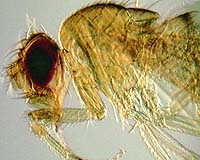
Moffett Field CA (SPX) Jun 21, 2006 Thousands of tiny fruit flies soon will journey into space aboard shuttle Discovery to help NASA scientists better understand changes in the human immune system caused by space flight. Despite differences in size and complexity, the Drosophila melanogaster, or common fruit fly, may help scientists from NASA Ames Research Center unlock the secrets of why astronauts often develop changes in their immune system during space flight. The experiment will be part of the Discovery mission to the International Space Station, currently scheduled for launch on July 1. "Understanding the immune system using fruit flies will be similar to the process we used to understand and build complex machines," explained Sharmila Bhattacharya, the experiment's principal investigator. "We start small and simple, and progress to more complicated and advanced concepts, thus extending our understanding in the future to helping optimize human performance in space," she added. Bhattacharya is leading the NASA Fungal Pathogenesis, Tumorigenesis and Effects of Host Immunity in Space experiment that will compare fruit flies grown in space with a genetically identical control sample grown in a NASA Kennedy Space Center laboratory. Past experiments with organisms indicate that biological changes occur in microgravity, or the near-weightlessness of orbital space flight. The immune system may become suppressed and some bacteria may become more virulent when exposed to weightlessness. A suppressed immune system and more virulent bacteria create a hazardous situation and is reason for further investigation. Scientists agree that the immune system has the ability to recognize potential pathogens, or disease-causing organisms in the body. Although there are two types of immune responses, this experiment focuses on the innate response, because of similarities between human and Drosophila innate immune system functions. The innate response produces blood cells, called hemoctyes, which can engulf the foreign invaders or produce chemicals to neutralize them. "When the phagocytes are activated, the body produces a higher blood cell count or increased levels of peptide proteins in the blood," Bhattacharya explained. To test the effects of space flight on the Drosophila immune system, scientists will quantify the blood count and the level of protein peptides after the flight and compare them with a control group maintained on Earth. The STS-121 mission is scheduled to last 12 days, and each day's progress will provide valuable information to help scientists understand space biology and how various biological systems work. Characteristics that make the fruit fly an ideal specimen are its ability to reproduce quickly; its short life span and resulting accelerated maturity rate; and a minimal resource requirement to support a large number of specimens in space. This allows for thousands of flies to be bred under space conditions. During pre-flight operations, genetically identical fruit flies will be divided into two groups: a control group kept on Earth and a space flight group. External conditions for both groups will be kept identical in terms of temperature, humidity, food source and living quarters. This will allow a direct comparison of the space-bred flies with the Earth-bred control flies to determine changes induced by prolonged spaceflight. Over the course of the experiment, these flies will undergo a complete metamorphosis and produce a second generation. The second generation will have matured from embryo to larva to adult entirely in a microgravity environment. As adults, they will make the descent to Earth, and a crew of scientists will begin a comparative analysis with their cousins. Immediate post-flight operations are critical, due to the rate of biological changes of these insects. Once in the lab, both sets of flies will be exposed to bacteria to test their immune system responses. Post-flight analyses will include blood cell count, blood level of antimicrobial peptides, phagocytosis, and blood clotting ability. Related Links Fruit fly research project  Researchers Make Progress With Robotic Telesurgery
 Fort Detrick MD (AFNS) May 16, 2006
However science fiction-esque it may have sounded decades ago, using robots to perform delicate surgeries is decidedly science fact today. Looking toward future decades, researchers are now trying to find ways to take robotic surgery to the battlefield. |
|
|

| The content herein, unless otherwise known to be public domain, are Copyright 1995-2006 - SpaceDaily.AFP and UPI Wire Stories are copyright Agence France-Presse and United Press International. ESA PortalReports are copyright European Space Agency. All NASA sourced material is public domain. Additionalcopyrights may apply in whole or part to other bona fide parties. Advertising does not imply endorsement,agreement or approval of any opinions, statements or information provided by SpaceDaily on any Web page published or hosted by SpaceDaily. Privacy Statement |