
A curious seagull strolled nonchalantly through the penguin enclosure at a zoo in Paris.
It looked harmless enough but the seagull could pose an existential threat to the penguins with a devastating bird flu outbreak killing hundreds of millions of birds across the world over the last few years.
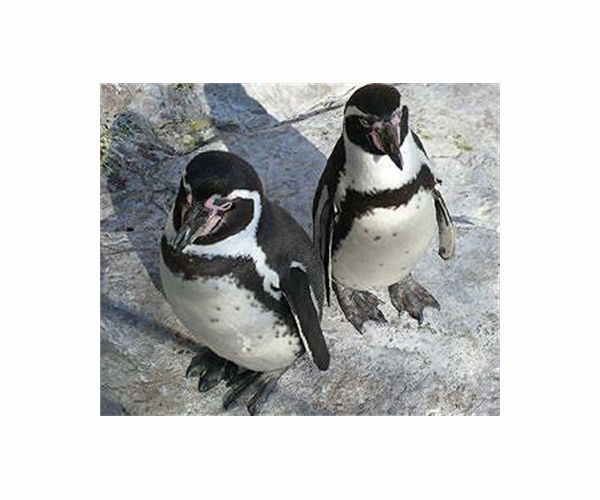
That is why 41 Humboldt penguins were queued up near their pool in the Paris Zoological Park on a cold December morning at the start of influenza season.
A zookeeper whispered some reassuring words to one called Cissou as a veterinarian injected him with his annual bird flu vaccine shot.
After getting his jab, Cissou waddled off back into his enclosure.
Around 10 zoo staff took the chance to weigh and measure the penguins, collecting feathers, taking blood samples, examining their feet and checking their microchips.
In a month, the young penguins born this year will get a booster shot.
The zoo, which is in Vincennes park in the east of the French capital, has never detected a case of bird flu.
But it is home to wild birds such as crows, magpies, geese and parakeets, and an outbreak would be catastrophic for the zoo animals.
Last week French health authorities warned this bird flu season is already looking like it will be the worst in a couple of years.
– Decades of experience with jab –
Bird flu was detected in Antarctica for the first time early last year, causing concern among scientists about the fate of the penguins there.
Sylvie Laidebeure, a vet at the Paris zoo, told AFP "these animals are generally threatened in their natural habitat" as she inserted a needle into the breast of a Humboldt penguin, which are classified as vulnerable by the International Union for Conservation of Nature.
Laidebeure said the zoo carries out a "risk-benefit ratio" before vaccinating each species.
There can be problems such as inflammatory reactions and "restraining them is also extremely stressful for the birds", she said.
The only birds to get a jab at the zoo are those that live outdoors, or in enclosures with mesh that could allow them contact with wild birds. These include hornbills, vultures, rheas and ostriches, marabou storks and cranes.
Though the practice remains rare across Europe, France has been vaccinating birds against avian influenza in zoos since 2006.
That was long before it became the first European country to vaccinate ducks in farms nationwide in 2023, using the same vaccine at a different dosage.
That extra two decades of experience has led to several scientific publications, Laidebeure said.
It also helped scientists learn how well the vaccine worked on different species — and showed that it was safe and effective.
"I think that helped reassure people" before it was rolled out on farms, Laidebeure said.
Volcanic eruptions may have brought Black Death to Europe
Paris, France (AFP) Dec 5, 2025 –
Previously unknown volcanic eruptions may have kicked off an unlikely series of events that brought the Black Death — the most devastating pandemic in human history — to the shores of mediaeval Europe, new research has revealed.
The outbreak of bubonic plague known as the Black Death killed tens of millions and wiped out up to 60 percent of the population in parts of Europe during the mid-14th century.
How it came to Europe — and why it spread so quickly on such a massive scale — have long been debated by historians and scientists.
Now two researchers studying tree rings have suggested that a volcanic eruption may have been the first domino to fall.
By analysing the tree rings from the Pyrenees mountain range in Spain, the pair established that southern Europe had unusually cold and wet summers from 1345 to 1347.
Comparing climate data with written accounts from the time, the researchers demonstrated that temperatures likely dropped because there was less sunlight following one or more volcanic eruptions in 1345.
The change in climate ruined harvests, leading to failed crops and the beginnings of famine.
Fortunately — or so it seemed — "powerful Italian city states had established long-distance trade routes across the Mediterranean and the Black Sea, allowing them to activate a highly efficient system to prevent starvation," said Martin Bauch, a historian at Germany's Leibniz Institute for the History and Culture of Eastern Europe.
"But ultimately, these would inadvertently lead to a far bigger catastrophe," he said in a statement.
– Deadly stowaways –
The city states of Venice, Genoa and Pisa had ships bring grain from the Mongols of the Golden Horde in central Asia, which is where the plague is thought to have first emerged.
Previous research has suggested that these grain ships brought along unwelcome passengers: rats carrying fleas infected with Yersinia pestis, the bacterium that causes plague.
Between 25 and 50 million people are estimated to have died over the next six years.
While the story encompasses natural, demographic, economic and political events in the area, it was ultimately the previously unidentified volcanic eruption that paved the way for one of history's greatest disasters, the researchers argued.
"Although the coincidence of factors that contributed to the Black Death seems rare, the probability of zoonotic diseases emerging under climate change and translating into pandemics is likely to increase in a globalised world," study co-author Ulf Buentgen of Cambridge University in the UK said in a statement.
"This is especially relevant given our recent experiences with Covid-19."
The study was published in the journal Communications Earth & Environment on Thursday.
