 |
 |
 |
 |
 |
 |
 |
 |
 |
 |

| . |  |
. |
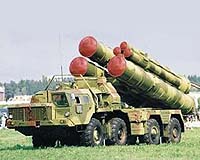
Russia To Export S-400 Air Defense System From 2009
Elektrostal, Russia (RIA Novosti) Aug 07, 2007 Russia could start producing the S-400 Triumf (NATO codename SA-21 Growler) air defense complex for export from 2009, the head of the Almaz central design bureau said Monday. "Within two years, our forces will test this system to ensure that there are no problems with it [on the market]... and then we will start producing them for export from 2009," Igor Ashurbeili said. He said the first S-400 complexes will be deployed at an air defense missile regiment in the town of Elektrostal, about 50 km to the east of Moscow, adding that under the state arms program, several dozen regiments are to be equipped with new systems. He said this may not be enough to cover Russia's entire territory, but was sufficient to protect the main cities and strategic installations. The S-400 Triumf is a new air defense missile system developed by Almaz as an upgrade to the S-300 family. It has been designed to intercept and destroy airborne targets at a distance of up to 400 kilometers (250 miles), or twice the range of the MIM-104 Patriot, and 2.5 times that of the S-300PMU-2. In April, Colonel-General Yury Solovyov, commander of the Air Defense Forces Special Command (former Moscow Military District Air Defense Command), said the system could also be used for limited purposes in missile and space defense, but that it is not intended to destroy intercontinental ballistic missiles. However, he said the system is capable of destroying stealth aircraft, cruise missiles and ballistic missiles with an effective range of up to 3,500 kilometers (2,200 miles) and a speed of up to 4.8 kilometers (3 miles) per second. The Russian Air Defense Forces, which are part of the Air Force, currently deploy more than 30 regiments equipped with S-300 missile complexes, which will be gradually replaced with S-400 systems.
Source: RIA Novosti Community Email This Article Comment On This Article Related Links Learn about missile defense at SpaceWar.com Learn about nuclear weapons doctrine and defense at SpaceWar.com All about missiles at SpaceWar.com Learn about the Superpowers of the 21st Century at SpaceWar.com
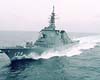
 Japan Buys Another Aegis System
 Moorestown, NJ (SPX) Aug 08, 2007
Lockheed Martin has received a $33 million contract to provide Aegis Ballistic Missile Defense (BMD) capability to the Aegis-equipped Japanese Maritime Self Defense Force destroyer JDS Chokai. JDS Chokai is the second of four Japanese destroyers to be outfitted with the Aegis BMD Weapon System. Aegis BMD is currently being installed on JDS Kongo, which is scheduled to return to sea and conduct its first BMD missile firing in late 2007. |
|
|

| The content herein, unless otherwise known to be public domain, are Copyright 1995-2007 - SpaceDaily.AFP and UPI Wire Stories are copyright Agence France-Presse and United Press International. ESA Portal Reports are copyright European Space Agency. All NASA sourced material is public domain. Additional copyrights may apply in whole or part to other bona fide parties. Advertising does not imply endorsement,agreement or approval of any opinions, statements or information provided by SpaceDaily on any Web page published or hosted by SpaceDaily. Privacy Statement |