|
 |
 |
 |
 |
 |
 |
 |
 |
 |

| . |  |
. |
Scientist In Texas Runs NASA's Lunar Laser Program
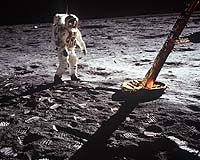
Washington DC (SPX) Nov 19, 2007 At the McDonald Observatory in western Texas, a unique space program has been quietly underway for more than 30 years. It is called the Lunar Laser Ranging Program. VOA's Paul Sisco has more. Research scientist Jerry Wiant has traveled a lonesome highway in western Texas to the McDonald Observatory in the Fort Davis Mountains almost every morning for 38 years. Once there, Wiant powers up a high powered laser beam that travels to the moon and back several thousand times a day. "Light Amplification by Stimulated Emitted Radiation," he explains is how Laser gets its name. It is all part of a study funded by the U.S. space agency, NASA. The laser sends pulses of green light through a telescope, to four reflectors on the moon's surface. Wiant explains, "It hits the reflector that we are aiming at and then that reflector sends the light back." Apollo 11 astronauts set up the first reflector when they made the first manned flight to the moon nearly 40 years ago. Subsequent Apollo mission's added two more reflectors, and an unmanned Russian mission sent a fourth. "The fact that we can lunar range [target moon reflector with laser] at all is just short of a miracle," said Wiant The lunar laser provides data on gravity, tides and spreading land masses here on Earth. It has also showed that the moon is moving away from Earth 3.8 centimeters annually. NASA scientist Wendell Mendell says, "This information about the structure of the Earth and the structure of the moon is fundamental to our understanding of how planets work." It is all in a day's work for Jerry Wiant, deep in the quiet hills of western Texas. Community Email This Article Comment On This Article Related Links Mars News and Information at MarsDaily.com Lunar Dreams and more
 NASA Tests Lunar Habitat In Extreme Antarctic Environment
 Washington DC (SPX) Nov 15, 2007
NASA will use the cold, harsh, isolated landscape of Antarctica to test one of its concepts for astronaut housing on the moon. The agency is sending a prototype inflatable habitat to Antarctica to see how it stands up during a year of use. Agency officials viewed the habitat Wednesday at ILC Dover in Frederica, Del., as it was inflated one last time before being packed and shipped to Antarctica's McMurdo Station. |
|
|

| The content herein, unless otherwise known to be public domain, are Copyright 1995-2007 - SpaceDaily.AFP and UPI Wire Stories are copyright Agence France-Presse and United Press International. ESA Portal Reports are copyright European Space Agency. All NASA sourced material is public domain. Additional copyrights may apply in whole or part to other bona fide parties. Advertising does not imply endorsement,agreement or approval of any opinions, statements or information provided by SpaceDaily on any Web page published or hosted by SpaceDaily. Privacy Statement |