
Earth Science News
WATER WORLD
Southern Indian Ocean waters lose salt as climate shifts currents
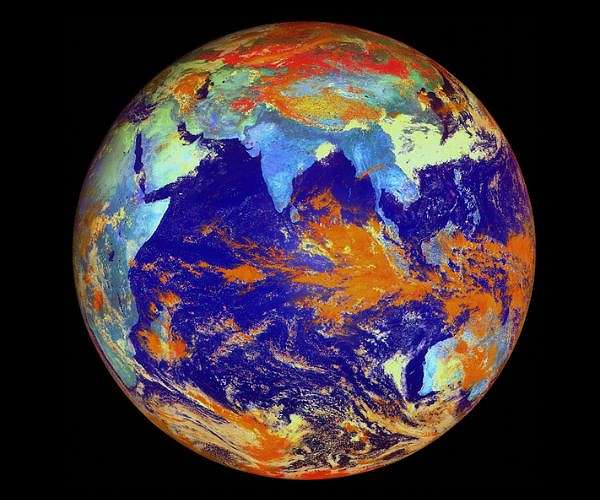
illustration only

Southern Indian Ocean waters lose salt as climate shifts currents

by Clarence Oxford
Los Angeles CA (SPX) Feb 13, 2026
The Southern Indian Ocean off the west coast of Australia is becoming markedly less salty, as rising global temperatures reshape wind patterns and ocean currents and drive more freshwater into the region, according to new research from the University of Colorado at Boulder and collaborators.

The study, published February 3 in the journal Nature Climate Change, examined six decades of observational records to trace how warming has altered large scale circulation across the Indian and tropical Pacific Oceans. The team found that changes in surface winds are redirecting currents so that an expanding pool of tropical freshwater now feeds into one of the historically saltiest areas of the Southern Hemisphere.

On average, seawater has a salinity of about 3.5 percent, roughly the same as dissolving one and a half teaspoons of table salt in a cup of water. In contrast, surface waters across an extensive swath from the eastern Indian Ocean into the western Pacific tropics are naturally fresher because frequent rainfall adds large volumes of freshwater while evaporation remains relatively low.

This sprawling Indo Pacific freshwater pool is tightly linked to the global thermohaline circulation, a planetary scale system that moves heat, salt and freshwater around the oceans. Warm, relatively fresh surface waters flow from the Indo Pacific toward the Atlantic Ocean, helping sustain the mild climate of western Europe before cooling, becoming saltier and denser in the North Atlantic, and eventually sinking to form a deep return flow back toward the Indian and Pacific basins.

Historically, the Southern Indian Ocean off southwest Australia has stood out as a dry zone where evaporation far exceeds precipitation, leaving surface waters notably salty. Drawing on long term measurements, lead researcher Weiqing Han and colleagues calculated that the area covered by high salinity surface water there has shrunk by about 30 percent over the past 60 years, representing the fastest freshening signal detected anywhere in the Southern Hemisphere.

First author Gengxin Chen estimated that the additional freshwater entering this ocean region each year is equivalent to about 60 percent of the volume of Lake Tahoe. By another measure, the influx would be sufficient to meet the drinking water needs of the entire United States population for more than 380 years, underscoring the scale of the change.

The researchers concluded that this freshening does not stem from local shifts in rainfall. Instead, a combination of observational data and climate model simulations shows that anthropogenic warming is altering surface winds over the Indian and tropical Pacific Oceans, which in turn is steering more water from the Indo Pacific freshwater pool into the Southern Indian Ocean.

As the surface ocean becomes fresher, its density decreases, which enhances the layering between lighter water above and saltier, denser water below. Stronger vertical salinity gradients suppress the mixing processes that normally allow surface waters to sink and deeper waters to rise, limiting the exchange of heat and nutrients between the upper ocean and the depths.

Previous work has suggested that continued climate change and freshwater input from melting Greenland ice and Arctic sea ice could slow portions of the North Atlantic branch of the thermohaline circulation by disrupting the salinity balance needed for surface waters to sink. The newly documented expansion of the Indo Pacific freshwater pool and its export toward the Southern Indian and Atlantic Oceans adds another potential influence on this global conveyor belt.

Weaker vertical mixing also has implications for marine ecosystems. When fewer nutrients are transported upward from deeper waters, phytoplankton and seagrass communities in the sunlit surface layers may face reduced food supplies, with cascading effects throughout the marine food web. At the same time, reduced mixing allows excess heat to remain trapped near the surface, intensifying thermal stress on organisms already challenged by rising ocean temperatures.

Chen noted that changes in salinity can directly affect plankton and seagrass, which form the base of many coastal and open ocean ecosystems. Shifts in these foundational communities could ripple through higher trophic levels, altering biodiversity and potentially reshaping fisheries and other ocean resources that depend on a stable physical and chemical environment.

Research Report: The expanding Indo-Pacific freshwater pool and changing freshwater pathway in the South Indian Ocean

Related Links
University of Colorado at Boulder
Water News - Science, Technology and Politics

Subscribe Free To Our Daily Newsletters
Tweet

RELATED CONTENT
The following news reports may link to other Space Media Network websites.
WATER WORLD
Three-year heatwave bleached half the planet's coral reefs: study
Paris, France (AFP) Feb 10, 2026
A study published on Tuesday showed that more than half of the world's coral reefs were bleached between 2014-2017 - a record-setting episode now being eclipsed by another series of devastating heatwaves. The analysis concluded that 51 percent of the world's reefs endured moderate or worse bleaching while 15 percent experienced significant mortality over the three-year period known as the "Third Global Bleaching Event". It was "by far the most severe and widespread coral bleaching event on reco ... read more

WATER WORLD
Huge pit visible in Shanghai after viral sinkhole video

Mexican navy ships arrive with humanitarian aid for Cuba

Morocco to spend $330 million on regions ravaged by floods: govt

Lebanon says 5 dead in building collapse in northern city

WATER WORLD
AI mapping sharpens global view of human development gaps

AI prosthetic arm speed shapes sense of body ownership in VR

India court clears mega project on sensitive island

JUNO VR system brings detector events into immersive 3D space

WATER WORLD
Southern Indian Ocean waters lose salt as climate shifts currents

Artificial wetlands help clean runoff and support circular agriculture

Eternal City eternally damp as Rome suffers record rainfall; Calabria again under water

Japan city gets $3.6 mn donation in gold to fix water system

WATER WORLD
Flights map how aerosols shape Antarctic clouds

Antarctic drilling peers into ice sheet's deep past

Greenland's west coast posts warmest January on record

NATO launches 'Arctic Sentry' mission after Greenland crisis

WATER WORLD
Trump issues order to support production of glyphosate

EU says Chinese levies on dairy products are 'unjustified'

Struggling farmers find hope in India co-operative

Coffee regions hit by extra days of extreme heat: scientists

WATER WORLD
Solar-driven ionosphere charges may nudge stressed faults toward rupture

Man missing in floods as France hit by record 35 days of rain

Floods wreak havoc in Morocco farmlands after severe drought

Cyclone Gezani kills four in Mozambique: officials

WATER WORLD
S.Africa to deploy troops to crime hotspots within 10 days, minister says

Senegal Navy searches for three missing sailors

Madagascar's new leader in Moscow for talks with Putin

Burkina jihadist attacks on army leave at least 10 dead

WATER WORLD
New tech and AI set to take athlete data business to next level

Brain learns faster from rare rewards than from repetition

French duo reach Shanghai, completing year-and-a-half walk

Men's fashion goes low-risk in uncertain world


The content herein, unless otherwise known to be public domain, are Copyright 1995-2026 - SpaceDaily.com. All websites are published in Australia and are solely subject to Australian law and governed by Fair Use principals for news reporting and research purposes. AFP, UPI and IANS news wire stories are copyright Agence France-Presse, United Press International and Indo-Asia News Service. ESA news reports are copyright European Space Agency. All NASA sourced material is public domain. Additional copyrights may apply in whole or part to other bona fide parties. All articles labeled "by Staff Writers" include reports supplied to Space Media Network by industry news wires, PR agencies, corporate press officers and the like. Such articles are individually curated and edited by Space Media Network staff on the basis of the report's information value to our industry and professional readership. Advertising does not imply endorsement, agreement or approval of any opinions, statements or information provided by Space Media Network on any Web page published or hosted by Space Media Network. General Data Protection Regulation (GDPR) Statement Our advertisers use various cookies and the like to deliver the best ad banner available at one time. All network advertising suppliers have GDPR policies (Legitimate Interest) that conform with EU regulations for data collection. By using our websites you consent to cookie based advertising. If you do not agree with this then you must stop using the websites from May 25, 2018. Privacy Statement. Additional information can be found here at About Us.
Subscribe Free To Our Daily Newsletters