|
 |
 |
 |
 |
 |
 |
 |
 |
 |

| . |  |
. |
SuitSat Launch From International Space Station Delayed
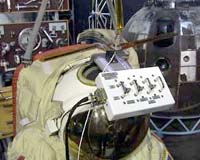
Newington CT (SPX) Nov 29, 2005 The launch of the novel "SuitSat" satellite has been delayed and will not be deployed from the International Space Station until sometime in January or February. "I have received information that the Russian EVA [space walk] that will deploy SuitSat, originally planned for December 8, has been delayed to late January/early February," Amateur Radio on the International Space Station (ARISS) International Chairman Frank Bauer, KA3HDO, announced this week. SuitSat consists of a surplus Russian Orlan space suit converted into a transmit-only satellite with an FM downlink frequency of 145.99 MHz using the call sign RS0RS. It will contain equipment to transmit voice messages, telemetry and an SSTV image on a nine-minute cycle as it orbits Earth. The batteries powering the satellite are expected to last about a week after deployment, and SuitSat's free-floating, decaying orbit is expected to cause it to re-enter Earth's atmosphere after some six weeks in space. The SuitSat signal should be strong enough to hear using a VHF transceiver or scanner and a simple antenna--thus making it an ideal project for students to monitor and track. SuitSat's payload also will also include a CD with hundreds of school pictures, artwork, poems, and student signatures. The ARISS-Russia team headed by Sergei Samburov, RV3DR, first came up with the idea for SuitSat, and the concept came in for extensive discussion during the October 2004 joint AMSAT Symposium/ARISS International Team meeting. Called Radioskaf or Radio Sputnik, the project was led by Project Manager A. P. Alexandrov and Deputy Project Manager A. Poleshuk from RSC Energia. On the US side, AMSAT Board member Lou McFadin, W5DID, oversaw hardware development for SuitSat. The electronics were built and tested in Phoenix, Arizona, by a team lead by Steve Bible, N7HPR. A Progress rocket supply flight transported the SuitSat hardware to the ISS in September for installation by the space station crew. Related Links SpaceDaily Search SpaceDaily Subscribe To SpaceDaily Express  Orbital To Build And Launch NASA's New Millennium Space Technology 8 Sat
 Dulles VA (SPX) Nov 29, 2005
Orbital Sciences announced Monday that it has been selected by NASA's Jet Propulsion Laboratory to design, develop and manufacture the next satellite in the NASA's series of New Millennium Program (NMP) technology demonstration spacecraft. |
|
|

| The content herein, unless otherwise known to be public domain, are Copyright 1995-2006 - SpaceDaily.AFP and UPI Wire Stories are copyright Agence France-Presse and United Press International. ESA PortalReports are copyright European Space Agency. All NASA sourced material is public domain. Additionalcopyrights may apply in whole or part to other bona fide parties. Advertising does not imply endorsement,agreement or approval of any opinions, statements or information provided by SpaceDaily on any Web page published or hosted by SpaceDaily. Privacy Statement |