|
 |
 |
 |
 |
 |
 |
 |
 |
 |

| . |  |
. |
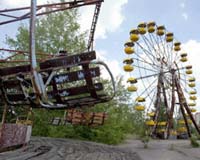
Ukraine Markets Chernobyl To Tourists
Kiev, Ukraine (UPI) Oct 18, 2004 Cash-strapped Ukraine is generating foreign currency reserves by commercializing the Chernobyl nuclear power plant disaster as a tourist site. In the evening of April 26, 1986, Reactor No. 4 exploded in the world's worst nuclear disaster, the Guardian reported Monday. Estimates of fatalities from the fallout reach as high as 15,000. Eventually, Soviet authorities sent 1,200 buses to evacuate 48,000 of the nearby villagers and erected a makeshift cordon around the power plant complex. Now, however, tourists can pay $250 per person for an all-inclusive, day long bus tour of the catastrophe, about 40 miles north of picturesque Kiev. About 90 tons of radioactive waste lies under the vast concrete that now covers the destroyed reactor. Paradoxically, much of the land around Chernobyl is lush: Most of it looks more like a nature sanctuary, with abundant forests, lush grass and herds of a rare species of wild horse. The lack of human activity has allowed wolves, foxes, wild boar and myriad other species to flourish. All rights reserved. Copyright 2004 by United Press International. Sections of the information displayed on this page (dispatches, photographs, logos) are protected by intellectual property rights owned by United Press International. As a consequence, you may not copy, reproduce, modify, transmit, publish, display or in any way commercially exploit any of the content of this section without the prior written consent of by United Press International. Related Links SpaceDaily Search SpaceDaily Subscribe To SpaceDaily Express  Yucca Mountain Site Must Make Use Of Geological Safety Net
 Bloomington - Nov 11, 2003
A proposed federal repository near Yucca Mountain, Nev., for the long-term storage of 70,000 metric tons of high-level radioactive waste must take advantage of the mountain's natural geological properties, according to a new study by scientists at Indiana University Bloomington and Los Alamos National Laboratory. |
|
|

| The content herein, unless otherwise known to be public domain, are Copyright 1995-2006 - SpaceDaily.AFP and UPI Wire Stories are copyright Agence France-Presse and United Press International. ESA PortalReports are copyright European Space Agency. All NASA sourced material is public domain. Additionalcopyrights may apply in whole or part to other bona fide parties. Advertising does not imply endorsement,agreement or approval of any opinions, statements or information provided by SpaceDaily on any Web page published or hosted by SpaceDaily. Privacy Statement |