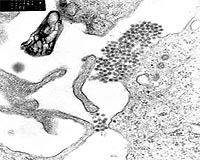
Water tanks and other water storage vessels such as modified wheelie bins are potential breeding sites for this disease-bearing mosquito.
Water tanks and other water storage vessels such as modified wheelie bins are potential breeding sites for this disease-bearing mosquito. |
The lead author of the study, Michael Kearney of the University of Melbourne, said climate change and evolutionary change could act together to accelerate and expand the mosquito's range. But human behavior in the form of storing water to cope with climate change is likely to have an even greater impact.
"The potential direct impact of climate on the distribution and abundance of (Aedes) aegypti is minor when compared to the potential effect of changed water-storage behavior," said Kearney. "In many Australian cities and towns, a major impact of climate change is reduced rainfall, resulting in a dramatic increase in domestic rainwater storage and other forms of water hoarding.
"Water tanks and other water storage vessels such as modified wheelie bins are potential breeding sites for this disease-bearing mosquito. Without due caution with water storage hygiene, this indirect effect of climate change via human adaptation could dramatically re-expand the mosquito's current range."
The study appears in the journal Functional Ecology.
Share This Article With Planet Earth
 del.icio.us del.icio.us |
 Digg Digg |
 Reddit Reddit |
 YahooMyWeb YahooMyWeb |
 Google Google |
 Facebook Facebook |
 Woman diagnosed with bird flu in China: report
 Beijing (AFP) Jan 31, 2009
| The content herein, unless otherwise known to be public domain, are Copyright 1995-2007 - SpaceDaily.AFP and UPI Wire Stories are copyright Agence France-Presse and United Press International. ESA Portal Reports are copyright European Space Agency. All NASA sourced material is public domain. Additional copyrights may apply in whole or part to other bona fide parties. Advertising does not imply endorsement,agreement or approval of any opinions, statements or information provided by SpaceDaily on any Web page published or hosted by SpaceDaily. Privacy Statement |