|
 |
 |
 |
 |
 |
 |
 |
 |
 |

| . |  |
. |
Ball Aerospace Celebrates 21 Years Of Ozone Research
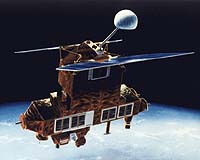
Boulder CO (SPX) Oct 21, 2005 Ball Aerospace & Technologies recently celebrated the retirement of one of the longest-running spacecraft missions to date. The Earth Radiation Budget Satellite (ERBS) was launched in 1984 on the Space Shuttle Challenger as the first spacecraft specifically designed to be launched by the Shuttle. Ball Aerospace was responsible for the spacecraft bus and the Stratospheric Aerosol Gas Experiment (SAGE II), one of the three instruments onboard. In 1984, the ERBS was expected to have a two-year design life, but the mission continued to return useful scientific data about the Earth's ozone layer for more than two decades. "ERBS delivered tremendous scientific value over its lifespan," says David L. Taylor, president and chief executive officer of Ball Aerospace & Technologies. "Its return on investment, calculating length of service and technical achievement combined, must be enormous. The ERBS spacecraft raised the bar for on-orbit performance." The ERBS was part of NASA's three-satellite Earth Radiation Budget Experiment (ERBE), designed to investigate how energy from the sun is absorbed and re-emitted by the Earth. This process of absorption and re-radiation is one of the principal drivers of the Earth's weather patterns. Observations from the ERBS were also used to determine the effects of human activities (such as burning fossil fuels and the use of CFCs) and natural occurrences (such as volcanic eruptions) on the Earth's radiation balance. Although the ERBS continued to return data from the SAGE II and ERBE instruments, newer spacecraft missions are producing improved data, making the funding for the mission unjustifiable. SAGE II and the Earth Radiation Budget Experiment instruments onboard the ERBS were turned off on Sept. 8. The ERBS was officially retired Oct. 14 after all remaining fuel was vented. The spacecraft is expected to drift in space until it disintegrates as it re-enters the Earth's atmosphere in approximately 18 years. The ozone studies for which the ERBS provided data helped to motivate an international community to develop the Montreal Protocol Agreement, resulting in the virtual elimination of CFCs. These chemicals were found harmful to the ozone based, in part, on the wealth of data the ERBS returned on the chemistry and motions of the Earth's upper troposphere and stratosphere. As a result, new ozone-friendly technologies were developed for air conditioning, refrigeration and industrial uses. Related Links SpaceDaily Search SpaceDaily Subscribe To SpaceDaily Express  Ozone Hole Third Largest On Record
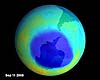 Geneva (AFP) Oct 18, 2005
This year's seasonal ozone hole over Antarctica was the third largest on record, but forecasters are uncertain how it will behave in the future, the World Meteorological Organisation (WMO) said Tuesday. |
|
|

| The content herein, unless otherwise known to be public domain, are Copyright 1995-2006 - SpaceDaily.AFP and UPI Wire Stories are copyright Agence France-Presse and United Press International. ESA PortalReports are copyright European Space Agency. All NASA sourced material is public domain. Additionalcopyrights may apply in whole or part to other bona fide parties. Advertising does not imply endorsement,agreement or approval of any opinions, statements or information provided by SpaceDaily on any Web page published or hosted by SpaceDaily. Privacy Statement |