|
 |
 |
 |
 |
 |
 |
 |
 |
 |

| . |  |
. |
Environmental Damage Threatens Human Health
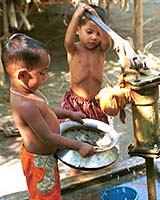
Bangkok (AFP) Dec 9, 2005 Environmental damage threatens human health and may have contributed to the spread of new diseases like bird flu and SARS, the World Health Organization said in a report Friday. "Human health is strongly linked to the health of ecosystems, which meet many of our critical needs," said Maria Neira, head of the WHO's department to protect the human environment. The four-year report warned that environmental changes were already affecting human health and said the effects could grow over the next 50 years. Changes in the way poultry are raised, with both large industrial farms in richer nations and poor farmers who live in close contact with their poultry, have helped make bird flu a global health concern, the report said. Viruses have more opportunity to evolve in the large farms, but if they spread outside, poor people living close to birds have a better chance of catching the disease. "SARS may have entered the human population via wild species, also raised domestically, and consumed as food in China. It is clear that ecosystem change, including changed biodiversity, influences the risk of transmission of many diseases to humans," the report said. Other environmental changes have endangered basic human needs -- like fresh water, clean air and a stable climate -- especially for people in poor countries, it said. Water-borne diseases kill 3.2 million a year, accounting for about six percent of all deaths, the report noted. More than one billion people have no access to clean drinking water, while 2.6 billion lack proper sanitation. Water also affects nutrition, as weakened fish stocks contribute to malnutrition in some 800 million people. More effective farming techniques have helped improve nutrition but those benefits are not spread equally around the world, said Carlos Corvalan, the WHO's lead expert on the report. "The benefits should be acknowledged," he said. "But these benefits are not enjoyed equally. And the risks we face now from ecosystem degradation, particularly among poor populations directly depending on their natural ecosystems for many basic needs, has to be addressed."
Source: Agence France-Presse Related Links WHO SpaceDaily Search SpaceDaily Subscribe To SpaceDaily Express  The Science Of Moving Dirt
 Ames IA (SPX) Dec 08, 2005
It can compact, grind, mix, shake and otherwise analyze the soil and earthworks that support roadways and construction projects. And it can do all that testing right next to the heavy equipment doing all the dirty work. |
|
|

| The content herein, unless otherwise known to be public domain, are Copyright 1995-2006 - SpaceDaily.AFP and UPI Wire Stories are copyright Agence France-Presse and United Press International. ESA PortalReports are copyright European Space Agency. All NASA sourced material is public domain. Additionalcopyrights may apply in whole or part to other bona fide parties. Advertising does not imply endorsement,agreement or approval of any opinions, statements or information provided by SpaceDaily on any Web page published or hosted by SpaceDaily. Privacy Statement |