 |
 |
 |
 |
 |
 |
 |
 |
 |
 |

| . |  |
. |
50 years after Sputnik, Russia revives space ambitions
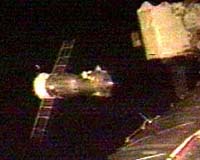
Moscow (AFP) Sept 30, 2007 Russia's space machines may have a clunky look but they are reliable and today these workhorses are underpinning a revival of Moscow's ambitions after the financial collapse of the 1990s. As Russia commemorates the 50th anniversary on Thursday of the launch of Sputnik 1 and the start of the Space Race, there is a sense of cautious optimism among its space scientists, says Igor Lysov, an expert with monthly magazine Space Industry News. Next year, state spending on space is projected to equal about 1.5 billion dollars (one billion euros). As Lysov observes: "That's 11 times less than the financing for NASA but 10 times better than the financing for the Russian space programme a decade ago." Russia all but abandoned funding space programmes as the Soviet Union's 1991 collapse brought a drastic budget shrinkage. This led to the closure of the troubled space station Mir in 2001. Today prospects are rosier as high world prices for oil and gas mean that Russia has a bulging budget surplus. Plans in the pipeline include a joint project with China to send a probe to Mars in 2009 and a Russian project to send a manned mission to the Moon by 2025. Moscow is also keen to keep up and running the International Space Station (ISS), a joint international project, despite Washington's plans to pull out at the end of 2015. While the ISS has received much of its funding from the United States, it has also been a major success for Russia as the Soyuz rocket has reliably ferried personnel there throughout the troubles experienced by the US Shuttle programme. And the launches have proved a useful public relations boost for Russia's scientists, thanks partly to an ongoing programme by which wealthy "space tourists" can spend nine days aboard the ISS "helping" the astronauts. Other plans under way include development of a new vessel for manned space flight and the setting up of a satellite navigation system to rival the US GPS system. Russia's space agency Roskosmos also hopes to set up a new launch pad in the far east by 2020 to supplement the Baikonur cosmodrome in Kazakhstan, the head of Roskosmos, Anatoly Perminov, said in September. Nonetheless, uncertainty remains due to funding problems and Russia's difficulties countering a brain drain of its most talented scientists, says the head of spacecraft designer RKK Energia, Leonid Gorshkov. "Even if commercial projects help us survive, the development of the space programme is impossible without state support," said Gorshkov. Community Email This Article Comment On This Article Related Links Station and More at Roscosmos S.P. Korolev RSC Energia Russian Space News
 Zailiyskiy Ala-Tau Mountain Peak Named In Honour Of S P Korolev
 Barkhan, Russia (SPX) Sep 24, 2007
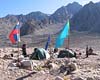
August 27 through September 7, the Baikonur city tourist club Barkhan held in the Zailiyskiy region of the northern Tien Shan a gathering of mountain climbers dedicated to the Year of Space. Out of ten participants two - V.A.Vashurkin and D.P.Svitavsky - were employees of the RSC Energia branch office at the Baikonur launch site. |
|
|

| The content herein, unless otherwise known to be public domain, are Copyright 1995-2007 - SpaceDaily.AFP and UPI Wire Stories are copyright Agence France-Presse and United Press International. ESA Portal Reports are copyright European Space Agency. All NASA sourced material is public domain. Additional copyrights may apply in whole or part to other bona fide parties. Advertising does not imply endorsement,agreement or approval of any opinions, statements or information provided by SpaceDaily on any Web page published or hosted by SpaceDaily. Privacy Statement |