|
 |
 |
 |
 |
 |
 |
 |
 |
 |

| . |  |
. |
Analysis: Nigeria, China boost energy ties
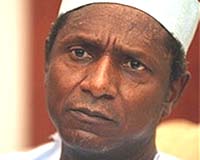
Beijing (UPI) Feb 29, 2008 Nigerian President Umaru Yar'Adua is visiting China this week to talk about ways to broaden their already-extensive oil and gas ties. Yar'Adua, who arrived in Beijing Wednesday, is set to meet with President Hu Jintao and other senior Chinese officials during his four-day visit. The focal interest of the talks would be to "sign agreements on energy-related matters," according to a spokesman for the Nigerian leader. Nigeria and China already enjoy strong relations in the energy sector. Beijing in 2006 bolstered those ties when it signed a deal for four oil drilling licenses in exchange for a promised $4 billion to be spent on power stations and a railroad for Nigeria. Since then, Africa's largest oil producer and the world's fastest-growing economy have been steadily improving energy relations. According to Nigerian officials, bilateral trade has steadily increased since the beginning of the decade and tops $50 billion per year. China is apparently undaunted by the challenges of oil and gas exploration in Nigeria, where violence directed at foreign oil firms operating in the petroleum-rich Niger Delta is the norm. Despite generating an estimated $300 billion in oil revenue since the 1970s, most Nigerians remain in poverty, a condition that has given rise to the violence that has affected production in Nigeria -- for both state and foreign oil firms. Militant groups assert that residents of the Niger Delta should receive a greater portion of the oil wealth reaped by the government and foreign companies. Attacks have taken a heavy toll on production, according to Nigerian energy officials, who contend oil production is down 20 percent to 2 million barrels per day. Amid the violence, China has been steadily moving to increase its presence in the Nigerian energy market. "The addiction to oil is driving the foreign policy" in China, said Emira Woods, co-director of Foreign Policy in Focus at the Institute of Policy Studies. However, China's growing stake in Nigeria has wrought concerns among some that its state-run energy firms will do little to help raise the majority of Nigerians out of abject poverty or diversify the country's economy, 95 percent of which revolves around gas and oil. "We haven't seen any evidence of that happening in other countries where China is present," Woods told United Press International, referring to Beijing's petroleum ties to Sudan and Angola. Nigeria's own dependence on countries like China to extract its most valuable commodity has made the country's economy one-dimensional and devastated its environment, said Nigerian Vice President Jonathan Goodluck. In recent remarks that shocked colleagues and Nigerian citizens alike, he told local media the discovery of, and dependence on, oil in the volatile West African country has caused Nigeria's economy and development to remain stagnant over the last several decades. "The overdependence on oil has put an unpleasant bracket in our national economic freedom," said Goodluck. He attributed the persistent poverty in Nigeria to a culture of corruption within the petroleum sector, giving rise to the country's militant groups in the delta. "The interpretation given by some observers is that present agitations were only but a reaction to the many decades of neglect," he added. Community Email This Article Comment On This Article Related Links Powering The World in the 21st Century at Energy-Daily.com
 Analysis: Russia's northern oil exports
  Washington (UPI) Feb 28, 2008
 The good news for Russia is that energy prices are at a world record, and that Russia is now tied neck and neck with Saudi Arabia as the world's leading oil producer, producing around 9 million barrels per day to a world consuming about 84 million bpd. Russia is the largest non-OPEC oil producer and now generates 12 percent of global production. |
|
|

| The content herein, unless otherwise known to be public domain, are Copyright 1995-2007 - SpaceDaily.AFP and UPI Wire Stories are copyright Agence France-Presse and United Press International. ESA Portal Reports are copyright European Space Agency. All NASA sourced material is public domain. Additional copyrights may apply in whole or part to other bona fide parties. Advertising does not imply endorsement,agreement or approval of any opinions, statements or information provided by SpaceDaily on any Web page published or hosted by SpaceDaily. Privacy Statement |