|
 |
 |
 |
 |
 |
 |
 |
 |
 |

| . |  |
. |
China To Launch 22 More Meteorological Satellites By 2020
Beijing, China (XNA) Dec 11, 2006 China will launch another 22 meteorological satellites by 2020 after successfully putting Fengyun-2D (FY-2D), its second geostationary orbit meteorological satellite, into orbit on Friday. The 22 satellites include four more from the Fengyun-2 series, 12 from the Fengyun-3 series and six Fengyun-4 series, according to sources with the China Meteorological Administration (CMA). Fengyun-2E, Fengyun-2F, Fengyun-2G and Fengyun-2H are scheduled to be launched in 2008, 2010, 2012 and 2014 respectively, said a CMA official. The first two experimental models in the Fengyun-3 series, a new generation of polar-orbiting satellites, will be launched in 2007 and 2009. The other 10 will go into orbit from 2011 to 2018, the official said. China will launch two experimental geostationary orbit Fengyun-4 models followed by four Fengyun-4 satellites from 2012 to 2019, he said. The FY-2D is expected to provide accurate and timely information about weather changes for the Beijing 2008 Olympic Games, especially the opening and closing ceremony and important contests. The FY-2D, developed and manufactured by the Shanghai Academy of Space flight Technology affiliated to China Aerospace Science and Industry Corp., is capable of carrying out infrared nephanalysis of the form and structure of clouds and can also an alyse data about visible daytime light. It will form a twin-star observation system with Fengyun-2C, China's first professional geostationary orbit weather satellite which went into orbit on Oct. 19, 2004, according to CMA. The two satellites have their own observation tasks, but can also replace each other if one of them malfunctions, the CMA said.
related report
Backgrounder: the history of China's Fengyun weather sat Fengyun-2D is the eighth meteorological satellite launched in China. The first seven include four Fengyun-1 polar orbit meteorological satellites and three Fengyun-2 series geostationary orbit meteorological satellites. The launch dates and sites are as follows: -- Fengyun-1A, launched 7 September 1988, in Taiyuan Satellite Launch Center, north China's Shanxi Province. -- Fengyun-1B, launched 3 September 1990, in Taiyuan. -- Fengyun-2A, launched 10 June 1997, in Xichang Satellite Launch Center, southwest China's Sichuan Province. -- Fengyun-1C, launched 10 May 1999, in Taiyuan. -- Fengyun-2B, launched 25 June 2000, in Xichang. -- Fengyun-1D, launched 15 May 2002, in Taiyuan. -- Fengyun-2C, launched 19 October 2004, in Xichang. Fengyun-2D is a backup satellite for Fengyun-2C, the first professional geostationary orbit weather satellite in China. They can operate together on an enlarged monitoring areas in order to minimize potential losses from very severe weather.
Source: Xinhua News Agency Related Links China Meteorological Administration Making money out of watching earth from space today  Jason-1 Celebrates Five Years In Orbit - Ocean Data Continues To Flow
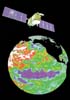 Washington DC (SPX) Dec 08, 2006
Jason-1 completes its 5th year on orbit on 7 December 2006. From its vantage point 1,330 kilometers (860 miles) above Earth, this follow-on to the highly successful TOPEX/Poseidon mission has provided measurements of the surface height of the world's oceans to an accuracy of 3.3 centimeters (1.3 inches). |
|
|

| The content herein, unless otherwise known to be public domain, are Copyright 1995-2006 - SpaceDaily.AFP and UPI Wire Stories are copyright Agence France-Presse and United Press International. ESA PortalReports are copyright European Space Agency. All NASA sourced material is public domain. Additionalcopyrights may apply in whole or part to other bona fide parties. Advertising does not imply endorsement,agreement or approval of any opinions, statements or information provided by SpaceDaily on any Web page published or hosted by SpaceDaily. Privacy Statement |