|
 |
 |
 |
 |
 |
 |
 |
 |
 |

| . |  |
. |
Cosmic Cockroaches Develop Faster
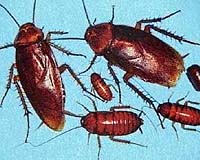
Voronezh, Russia (RIA Novosti) Jan 18, 2008 Cockroaches conceived in space onboard the Russian Foton-M bio satellite have developed faster and become hardier than 'terrestrial' ones, a research supervisor said on Thursday. The research team has been monitoring the cockroaches since they were born in October. The scientists established that their limbs and bodies grew faster. "What is more, we have found out that the creatures... run faster than ordinary cockroaches, and are much more energetic and resilient," Dmitry Atyakshin said. Cockroaches, as well as other types of insects, can give birth several times after one impregnation, and the cockroaches that conceived during the bio-satellite's September 14-26 flight have since given birth to their second and third batches of offspring. "The second and third batches did not show these peculiarities of growth and physiology," the scientist noted. 'Ordinary' cockroaches are already known for their extraordinary resilience. Some species can last almost an hour without oxygen or a month without food, and are able to withstand high doses of radiation. The September 14-26 flight was part of an ongoing experiment into the effects of space flight by the Institute of Biomedical Problems (IBMP). The creatures were sealed in special containers, and a video camera filmed them during the flight.
Source: RIA Novosti Community Email This Article Comment On This Article Related Links Life Beyond Earth Lands Beyond Beyond - extra solar planets - news and science
 Life On The Borderline
 Boston MA (SPX) Jan 17, 2008
Our planet is changing before our eyes, and as a result, many species are living on the edge. Yet Earth has been on the edge of habitability from the beginning. New work by astronomers at the Harvard-Smithsonian Center for Astrophysics shows that if Earth had been slightly smaller and less massive, it would not have plate tectonics - the forces that move continents and build mountains. And without plate tectonics, life might never have gained a foothold on our world. |
|
|

| The content herein, unless otherwise known to be public domain, are Copyright 1995-2007 - SpaceDaily.AFP and UPI Wire Stories are copyright Agence France-Presse and United Press International. ESA Portal Reports are copyright European Space Agency. All NASA sourced material is public domain. Additional copyrights may apply in whole or part to other bona fide parties. Advertising does not imply endorsement,agreement or approval of any opinions, statements or information provided by SpaceDaily on any Web page published or hosted by SpaceDaily. Privacy Statement |